


This article was last updated on November 20, 2025

Parents experience intense stress when they try to get their children out of the house for school, sports, and enrichment activities. The behavior known as Class Refusal or school avoidance exists separately from laziness. This behavior contains different elements which need proper handling through development-based techniques and focused strategic approaches.
This guide provides a complete system for handling child transitions, investigating student resistance factors through established behavioral methods that generate internal motivation, support emotional control, and create successful learning pathways.
Understanding the “Why”: Unpacking the Root Causes of Class Resistance
Why does my child suddenly not want to attend class? Resistance is often a symptom, not the problem. Identifying the root causes allows for successful intervention methods to be developed.
Fear and Performance Anxiety
Resistance often manifests as unaddressed anxiety. The situation develops from different factors which include fear of failure, social issues with peers or bullying, and overwhelming school demands. The child develops a mental survival mechanism through an internal dialogue of “I might fail,” which leads them to escape the perceived danger. Empathy must precede structure.
Read about help your children build coping skills and resilience
Fatigue, Over-scheduling, and Sensory Overload
Young brains that develop rapidly show increased vulnerability to mental exhaustion. A child may lose emotional control simply because of a busy schedule, creating the false impression that they lack motivation. A student might resist attending class because they require more time to relax and engage in unstructured play.
Read more positive effects of an activity like Martial Arts for a child in school
Lack of Perceived Value (The Intrinsic Motivation Gap)
A child’s motivation to participate drops to zero when they fail to see any personal or immediate benefits. If they join only to make their parents happy, the effort required to attend exceeds the value they see in it. Goals need to shift toward developing skills and finding pleasure instead of just following strict rules.
Read About get children to behave from the inside out
Foundational Strategy 1: Proactive Routine and Transition Mastery
Establishing a regular, optimized routine enables both parents and children to avoid “decision fatigue” while maintaining control in stressful situations.
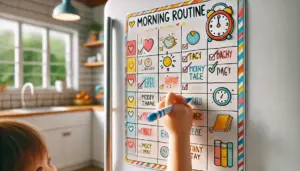
Creating a Predictable Pre-Class Sequence
The final moments before departure tend to be the most dangerous period for disagreements. A pre-planned sequence helps reduce conflicts.
-
Visual Schedule: Use a whiteboard or checklist detailing steps (e.g., snack, shoes, pack bag).
-
Time Chunking: Assign specific, short timeframes to tasks (e.g., “Five minutes for shoes”).
-
Consistency: Every class needs to follow the same sequence to establish a predictable learning environment.
-
The 15-Minute Rule: Children who refuse their classes often do so because they want to continue preferred activities (like screens). This transition point is the main location for intervention.
How to Implement Proactive Activity Transition:
-
Advance Warning: 15 minutes prior to the readiness sequence, give a clear, calm verbal warning.
-
Transitional Task: 5-10 minutes prior, engage the child in a low-excitement, brief chore (e.g., putting away three toys). This acts as a mental ‘reset’ before the harder task of leaving.
-
Positive Frame: Always link the end of the current activity to the start of the new one with positive language.
Foundational Strategy 2: Mastering Parental Emotional Regulation
A key pillar of expertise in parenting is self-regulation. A parent’s stress, haste, or anger creates direct effects on the child, often leading to escalating resistance.
Modeling Calm: The Mirror Effect
A child encounters brain stress when their parent displays rushed or panicked behavior. The parent shows emotional control through composed behavior, demonstrating to the child how to handle their own emotions. Parents must control their own anxiety about being late to handle this situation effectively.
Shifting from Rush to Readiness
Parents need to add extra time buffers to their schedule to lower stress levels. During the commute or preparation, light positive discussion about upcoming class content should replace “compliance talk” (nagging).
Communication and Motivation

Asking Open-Ended, Affective Questions
-
Avoid: “Did you do well today?” (This focuses on performance).
-
Ask: “What was the most fun thing you did today?” or “What made you feel proud about your effort?”
Implementing Motivational Systems: Bridging Behavior
Rewards need to connect with measurable behavior goals instead of results.
Structured Reinforcement Example:
-
Pre-Frame Behavior: “We are going to focus on getting ready with calm energy for the next three classes.”
-
Goal: Attend three consecutive classes without an emotional outburst during the transition.
-
Reward: A mutually agreed-upon, special activity (e.g., choosing the Friday night movie).
The Power of Choice and Autonomy
A lack of control over their lives can lead older children to refuse attending class. Allow students to select between two options for their daily routine activities, such as choosing between red or blue socks or which snack to pack. Small decision control provides children with independence, which leads to less resistance.
Read more talk to kids about being self-driven and self-controlled
Conclusion: Fostering Lifelong Motivation
The solution to class refusal requires parents to combine expert behavioral techniques with mindful parenting methods. This system helps children learn emotional regulation through Trust (built by routine), Authority (shown by calm modeling), and Experience (positive, structured communication).
The ultimate goal is to transition your child from viewing class as a parental obligation to seeing it as an opportunity for mastery and competence. The journey ahead requires endurance, but building a positive learning connection will become your most valuable accomplishment.
Frequently Asked Questions (FAQs)
Q1: What is “Class Refusal” and how is it different from a child just being lazy? A: Class refusal is a behavioral pattern of strong resistance, often driven by underlying anxiety, fatigue, or a lack of intrinsic motivation. It is an emotional response, distinct from laziness, which is simply a lack of willingness to exert effort.
Q2: How long should I continue with a reward system before it becomes ineffective? A: Use rewards based on extrinsic motivation as a temporary bridge, typically for 4-8 weeks, to establish a new habit. The transition from external rewards to internal satisfaction should start when the behavior pattern develops to make positive actions self-sustaining.
Q3: Should I force my child to go if they are having a meltdown? A: No. Forcing a child during a full emotional meltdown is counterproductive and damages trust. The first step should focus on managing emotions. If refusal is consistent, seek professional advice to rule out underlying anxiety or developmental issues.
Read more How to talk to kids about feelings
Q4: My child loves the activity but hates the transition. What is the best strategy? A: The best way to improve transitions involves using the 15-Minute Rule, which combines advance warning and a transitional task with a rigid pre-class routine. The resistance is usually to being interrupted, not the activity itself.
Q5: How can I tell if the class refusal is related to a problem at the class (e.g., a teacher or peer issue)? A: After class, ask open-ended affective questions like “Did anything happen today that made you feel worried?” Instructors should also work with students to discover any social factors causing sudden attitude changes.
Q6: Does threatening to take the class away work as a motivator? A: No. Threats and punishment erode trust and fail to address the underlying cause of the resistance. Students may follow rules for a short time (extrinsic motivation), but this method fails to create lasting intrinsic motivation.