


This article was last updated on July 16, 2026
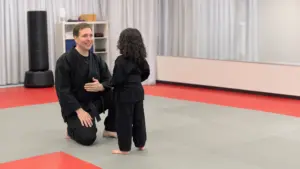
Table of Contents
- Why Kids Struggle With Big Feelings, Anger, and Self-Control
- How to Help Kids Calm Down During a Meltdown
- How Martial Arts Helps Kids Build Self-Control Over Time
- Common Parent Concerns About Martial Arts and Emotional Regulation
- A North Royalton Parent’s At-Home Plan for Big Feelings
- Next Steps for Parents
- FAQs About Kids, Big Feelings, and Martial Arts
You know the moment. The homework is spread across the kitchen table, dinner is twenty minutes from ready, and your child goes from zero to full meltdown over a broken crayon. You’ve tried the calm voice, the timeout, the bribe, and none of it lands the way the parenting books promised. If you’ve ever wondered whether your kid will ever learn to manage those big feelings, you are not failing, and your child is not broken.
Key Takeaways
Children develop emotional regulation gradually and usually need a calm adult to help them settle before they can manage big feelings on their own, a process called co-regulation.
The fastest way to defuse a meltdown is to stay calm yourself, get on your child’s level, name the feeling, invite slow breathing, and save the lesson for after everyone has settled.
Structured kids martial arts in North Royalton, OH gives children repeated, guided practice in focus, listening, patience, and self-control that carries over to home and school.
Martial arts taught in a respectful environment builds restraint and discipline, not aggression, and children do not need to be athletic to benefit.
Why Kids Struggle With Big Feelings, Anger, and Self-Control
Big emotions are not a sign that something has gone wrong. They’re a normal part of a developing brain that hasn’t finished wiring the circuits responsible for patience, impulse control, and calm decision-making. Your child feels everything intensely because the “thinking” part of the brain is still under construction while the “reacting” part is already running at full speed. That gap is exactly why a small frustration can trigger a huge reaction. Researchers at Harvard Health Publishing point out that children learn to manage feelings through co-regulation, meaning a calm adult helps them recognize and tolerate emotions long before they can do it alone.
What Emotional Regulation Means for Children
Emotional regulation is a child’s growing ability to notice a feeling, pause before reacting, choose a response, and recover afterward. It is not the absence of anger or sadness. It’s the slowly built skill of feeling something strong without being completely swept away by it. Like reading or tying shoes, child emotional regulation strategies take years of practice and plenty of patient repetition.
Is It Bad Behavior or Emotional Overwhelm?
Most “misbehavior” during a meltdown is actually overwhelm, not defiance. Think of it as the “Thinker” brain going offline while the reactive “Caveman” brain takes over. A defiant child is testing a limit on purpose; an overwhelmed child has simply lost access to the part of the brain that makes good choices. When you see the difference, those hard moments become teachable moments instead of battles.
Why Calm First, Teach Later Works Better
You cannot reason with a child who is mid-explosion, and trying only adds fuel. Harvard Health Publishing describes co-regulation as the calm adult lending their steadiness until the child can borrow it. In practice, that looks like kneeling down to eye level, lowering your voice, naming what you see, and waiting until the storm passes before you talk about what happened. Lead with connection, and the lesson lands far better once the child can actually hear it.
How to Help Kids Calm Down During a Meltdown
When emotions boil over, your job is not to fix the problem in the moment. It’s to help your child’s nervous system settle so their thinking brain can come back online. The good news is that a handful of simple, repeatable moves work almost anywhere, whether you’re at home, buckled in the car, or standing in the pickup line after school. Keep them short and predictable so your child learns the pattern over time.
A Simple 5-Step Calm-Down Script for Parents
Use this exact sequence when a meltdown starts:
-
Pause and slow yourself down first.
-
Get on your child’s level by kneeling or sitting.
-
Name the feeling out loud: “You’re really frustrated right now.”
-
Invite slow breathing together, like blowing out a candle.
-
Revisit the problem and solutions only after your child is calm.
Calming Techniques for Big Tantrums
Different moments call for different tools, so keep several ready. Slow breathing, grounding questions like “What are five things you can see?”, humming, gentle rocking, stretching, and drawing all help children release tension safely. The “Music Carpet Ride,” where your child lies down and imagines floating on a soft carpet as quiet music plays, works wonders for winding down before bed. For an even deeper toolkit, these proven calm down strategies for kids give you dozens of options to try.
Using an “Anger Mountain” to Teach Emotional Awareness
Anger Mountain is a picture that helps kids understand their own emotions. The base of the mountain is calm, the climb is frustration building, the peak is the explosion, and the descent is calming back down. Teaching your child to notice when they’re “climbing” gives them a chance to use a breathing or rocking tool before they reach the top. Over time, they learn to catch the climb earlier and earlier.
When a Calm Spot Helps Kids Reset
A calm spot is a cozy corner stocked with soft items, favorite books, or a weighted blanket where a child can settle until they’re ready to rejoin. The key is framing. A calm spot is a reset area, never a punishment. When kids choose it themselves, they’re practicing self-regulation instead of being sent away.
If your child needs more structure than the living room can offer, a supportive class environment may help build these skills faster.
How Martial Arts Helps Kids Build Self-Control Over Time
Calming tools handle the moment. Building lasting self-control takes something more: consistent, guided practice in an environment designed for it. That’s where structured martial arts earns its reputation with parents. Every class asks a child to listen, wait, focus, control their body, and respond respectfully, over and over, until those skills become second nature. It’s repetition with purpose, wrapped in something kids actually enjoy.
Why Structure Helps Children Feel Safe and Focused
Children settle best when they know what comes next. Predictable class routines, clear expectations, and steady instructor guidance give kids a framework where self-control feels achievable rather than overwhelming. Inside that structure, a child who struggles to sit still at home discovers they can focus for a full class, and that success builds on itself.
Martial Arts for Focus and Discipline
Structured training gives the brain exactly the kind of practice it needs to strengthen focus and self-discipline. Research shared through the National Center for Biotechnology Information supports the idea that structured self-regulation training can improve executive function, attention, and behavior-related skills in children a large review of nearly 50 studies that even includes martial arts among effective self-regulation programs. Martial arts fits that mold perfectly, and it pairs naturally with the everyday habits that help kids build self-control over time.
Turning Physical Energy Into Calm Attention
Kids carry a surprising amount of stress in their bodies, and movement is one of the healthiest ways to release it. A good martial arts class channels that restless energy into controlled drills, then guides children back to focused stillness. It’s not a medical treatment, but the rhythm of exertion followed by calm teaches children how to settle their own bodies on command.
Can Martial Arts Help Kids Who Get Angry Easily?
Yes. For children who anger quickly, martial arts offers structured ways to pause, breathe, listen, and respond instead of react. The discipline of bowing, waiting for a turn, and following an instructor’s cues gives a hot-tempered child dozens of small chances to practice restraint in a low-stakes setting, which slowly rewires the automatic explosion into a considered response.
What North Royalton Parents Notice at Home and School
The real proof shows up outside the dojo. Parents around North Royalton consistently describe the same shifts: better focus during homework, calmer mornings, improved behavior at school, and a child who handles frustration with a little more grace. These aren’t abstract promises. They’re the everyday changes local families point to after a few months of consistent classes.
Better Focus and Behavior at School
Teachers often notice the difference before parents do. One local North Royalton mother shared exactly that kind of turnaround: “Master Chris and the entire team are wonderful to work with. They really took the time to get to know our little guy. His concentration and focus have really improved over the last few months and his behavior at school has improved as well. Definetly worth the investment.” That connection between structured training and the classroom is well documented in the broader martial arts benefits at school.
More Confidence and Self-Discipline at Home
The change at home can be just as striking. Another North Royalton dad described watching his son transform over a matter of months: “The staff does an excellent job of working with my son. My sons confidence and self discipline have sky rocketed through the roof. I could not have asked for a better experience for my child.” That before-and-after shift, from reactive to self-directed, is what keeps families coming back.
Life Lessons Beyond Kicks and Blocks
Parents are often surprised by how much of the value is mental rather than physical. One local mom put it plainly: “Couldn’t be happier with the training my daughter has received. She has learned so much! Most don’t realize that besides the physical part there are so many mental aspects and life lessons that she has learned. The leadership abilities and confidence she has learned is something she could have never learned at this age. I am beyond thankful to Master Chris for everything we have and will continue to learn from the program!” The same mental training that builds leadership also helps sharpen focus through movement.
Why Local Parent Reviews Matter
Reviews from other North Royalton families tell you something a brochure can’t: how a program actually treats kids day to day. Parents consistently look for staff who take time to understand each child, not just teach techniques. When multiple local families mention the same instructors by name, that’s a trust signal worth paying attention to.
See how Inspire Martial Arts helps North Royalton kids build focus and confidence.
Common Parent Concerns About Martial Arts and Emotional Regulation
It’s smart to ask hard questions before signing your child up for anything. Most parents share the same handful of worries, and a good program has clear, reassuring answers for each one. Here’s how the concerns we hear most often actually play out on the mat.
Will Martial Arts Make My Child More Aggressive?
No. A well-structured martial arts program teaches the opposite of aggression: respect, self-control, listening, and restraint. Children learn that real strength means knowing when not to use physical skills, and discipline is emphasized in every single class.
What If My Child Is Shy, Anxious, or Easily Overwhelmed?
Shy and anxious kids often thrive once they settle in. Patient instructors, predictable routines, and gradual confidence-building let an overwhelmed child succeed in small steps. The staff attention that local parents praise, like the team that “took the time to get to know our little guy,” matters most for these children.
What If My Child Has Trouble Listening?
Listening is a skill, and it improves with practice. Martial arts classes give children repeated chances to follow directions, wait their turn, and respond to respectful instruction. What looks like “not listening” at home is often just a skill that hasn’t had enough reps yet.
Does My Child Need to Be Athletic First?
Not at all. Kids do not need to be naturally athletic or coordinated to start. The goal is personal progress in confidence, focus, coordination, and self-control, and every child begins exactly where they are.
A North Royalton Parent’s At-Home Plan for Big Feelings
You don’t have to wait for a class schedule to start helping your child today. A simple daily routine at home builds the foundation, and it pairs beautifully with structured classes once you’re ready. Try this four-step plan over the next couple of weeks and watch how your child responds.
Step 1: Name the Feeling
Give your child language for what’s happening inside. Model simple phrases like “You feel frustrated,” “That felt disappointing,” or “Your body looks really upset right now.” Naming an emotion is the first step toward taming it.
Step 2: Practice One Calm-Down Tool Daily
Pick just one tool and practice it before a meltdown hits. Belly breathing, counting to ten, a quick stretch, or a visit to the calm spot all work well. A tool practiced when calm is a tool your child can actually reach for when upset.
Step 3: Reinforce Self-Control With Structure
Children learn self-control through repetition and routine, not lectures. Consistent bedtimes, predictable expectations, and calm follow-through teach more than any speech. For deeper tactics, these ideas to help kids handle anger at home give you a practical starting point.
Step 4: Add a Positive After-School Outlet
Kids need a healthy place to burn energy and practice focus with other children. A structured after-school activity like Inspire Martial Arts in North Royalton gives your child a supervised environment to build discipline, focus, and respectful behavior week after week.
Next Steps for Parents
If you’ve read this far, you’re clearly ready to do something about those big feelings, and a trial class is the lowest-pressure way to see if structure clicks for your child. Inspire Martial Arts sits right on Royalton Road, and the current online offer makes it easy for new families to try a class before committing.
When to Consider a Structured Class
A few signs suggest your child may be ready for structured classes:
-
Frequent frustration or meltdowns
-
Difficulty listening or following directions
-
Low confidence or shyness
-
Trouble focusing at home or school
-
Behavior concerns from teachers
-
A need for a healthy physical outlet
What to Look for in a Kids Martial Arts Program
Not every program is built the same. Look for patient instructors, age-appropriate classes, clear routines, a genuine emphasis on respect, real confidence-building, and open communication with parents. The right fit should feel supportive from the very first visit.
Try Inspire Martial Arts in North Royalton
Big feelings don’t have to run your household. With calm co-regulation at home and consistent structure on the mat, children learn to pause, focus, and choose their response, and those skills follow them to school, friendships, and beyond. The families of North Royalton have seen it happen, often crediting instructors like Master Chris by name. Your child can build the same focus and self-control.
Ready to see the difference? Request more information or view the trial and class schedule at Inspire Martial Arts, 10139 Royalton Rd Suite B, North Royalton, OH 44133 — or call 440-877-9112 to book your child’s first class.
FAQs About Kids, Big Feelings, and Martial Arts
How do I help my child calm down when they are angry?
Stay calm yourself first, then get down to your child’s level and name the feeling you see. Invite slow breathing, reduce noise and stimulation around them, and wait until they’ve settled before you talk about solutions. Trying to teach or reason mid-meltdown almost always backfires.
At what age can kids start martial arts in North Royalton?
Many children can begin age-appropriate martial arts as early as four years old, and Inspire Martial Arts offers separate programs for ages 4–6 and 7–12. The best starting age depends on your child’s maturity, comfort level, and the structure of the class rather than a strict number.
How long before I see behavior changes from martial arts?
Most parents notice small shifts within the first few weeks, such as better listening or a bit more patience. Bigger changes in focus, confidence, and self-control typically build over several months of consistent attendance, since these skills grow through repetition.
Is martial arts good for kids with ADHD or trouble focusing at school?
Martial arts can help children who struggle with focus by offering repeated, structured practice in attention, following directions, and goal-setting. The predictable routines and clear expectations give an easily distracted child a framework to succeed, though it works best alongside guidance from your child’s doctor or teacher.
How much does kids martial arts cost in North Royalton?
Pricing varies by program and schedule, and Inspire Martial Arts frequently runs an online trial offer for new families. The easiest way to get current details is to request information directly or call the North Royalton location at 440-877-9112.
What should I do if my child has frequent, intense meltdowns?
Use calm co-regulation strategies in the moment, track what triggers the outbursts, and practice calming tools during peaceful times so they’re ready when needed. If meltdowns are severe, unsafe, or interfering with daily life, reach out to your pediatrician or a child mental health professional for added support.
Will martial arts make my child more aggressive at home?
No. Reputable martial arts programs emphasize respect, restraint, and self-discipline, teaching children that skills are for control rather than harm. Most parents actually report calmer, more respectful behavior at home after consistent training.