


This article was last updated on July 08, 2026
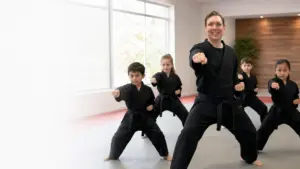
Table of Contents
- What It Actually Means to Raise a Self-Motivated Child
- The Science Behind Focus, Self-Control, and Physical Structure
- How Inspire Martial Arts Translates Mat Skills to Home Habits
- Steps Parents Can Take This Week to Encourage Independence
- Taking the Next Step in North Royalton
- Frequently Asked Questions
You have reminded your child about the same chore three times, and they still have not moved. Homework turns into a standoff, corrections turn into meltdowns, and anything hard gets abandoned before the first real try. If that sounds like your evenings, you are not failing as a parent your child simply has not built the internal wiring for follow-through yet.
Self-drive is not something kids absorb from a lecture. It gets built through repeated practice, clear structure, encouragement, and a little positive accountability. That is exactly why so many local families eventually look for something beyond another reward chart to stop the daily homework battles.
Key Takeaways
- Martial arts for self-discipline in North Royalton gives kids a structured place to practice focus, patience, emotional control, and goal-setting the same habits parents want at home.
- Self-motivation is a learned skill built through routine, responsibility, and repetition, not a personality trait a child either has or lacks.
- Self-control is tied to executive function skills like attention, working memory, and impulse control, which strengthen with consistent practice.
- Structured children’s martial arts classes turn mat behaviors listening, waiting, trying again into habits that show up at school and home.
Families looking for a structured way to help their child practice these skills can explore local kids’ martial arts classes at Inspire Martial Arts.
What It Actually Means to Raise a Self-Motivated Child
Self-motivation gets confused with instant obedience, but they are not the same thing. A compliant child does what you say the moment you say it. A self-driven child slowly learns to act without being told at all. That difference matters, because obedience disappears the second you leave the room internal motivation travels with them. Building it is a gradual process, and understanding how children develop self-esteem is a big part of the picture.
A self-motivated child is learning to:
- Start tasks without constant reminders
- Keep going when something feels hard
- Manage frustration instead of exploding or shutting down
- Follow through on responsibilities
- Take pride in effort, not only in the final result
- Make good choices even when no one is watching
A self-motivated child is one who can begin, continue, and complete tasks with growing independence. It does not mean they never need reminders. It means they are steadily learning to manage effort, emotions, and responsibility without constant pressure from adults.
Shifting from Managing to Guiding
Most parents fall into managing every behavior because it feels faster in the moment. The long-term goal, though, is guiding your child toward ownership. This is not a sign you are doing something wrong kids need practice and structure before they can consistently regulate themselves. Think of your role slowly shifting from full-time manager to part-time coach.
If any of these sound familiar, you are in good company:
- “My child only does things when I remind them.”
- “They melt down the moment I correct them.”
- “They say ‘I can’t’ before they even try.”
- “They rush through everything just to be finished.”
- “They avoid responsibility unless there’s a reward attached.”
Youth emotional regulation the ability to notice a feeling and choose a response instead of reacting develops with repetition. Every calm recovery from frustration is a rep. Kids need a lot of reps.
The Science Behind Focus, Self-Control, and Physical Structure
Here is the part that changes how a lot of parents see the problem: self-control is not really about willpower. It runs on a set of mental skills researchers call executive function. Those skills let a child hold instructions in mind, ignore distractions, wait their turn, and adjust when plans change. When those skills are underdeveloped, “just focus” is an impossible ask.
Researchers at Harvard University’s Center on the Developing Child explain that executive function and self-regulation help children manage attention, control impulses, remember instructions, and adjust their behavior. Their key point for tired parents is a hopeful one: these skills are built through practice, supportive relationships, routines, and structured activities not handed out at birth.
The skills usually grouped under executive function include:
- Working memory
- Flexible thinking
- Inhibitory control
- Attention control
- Emotional regulation
Structured physical activities give children repeated opportunities to practice exactly these skills. That is the quiet mechanism behind why the right activity can shift behavior at home.
Why Screen Time and Constant Stress Hinder Motivation
Kids struggle to focus when they are tired, overstimulated, afraid of failing, or bouncing between screens and responsibilities all evening. Screens hand out instant rewards, while homework and chores demand delayed gratification and a brain trained on quick hits finds the slow work genuinely harder. Pressure makes it worse, because a stressed child gets more reactive, not more focused. The fix is not more nagging; it is more practice at sustained attention in a setting that actually holds their interest, which is one reason many families see improvements in academics after their child starts a structured program.
Children often struggle with motivation when they are tired, overstimulated, afraid of failure, used to instant rewards, or unsure how to start a task. Building self-control begins with small routines, clear expectations, encouragement, and repeated practice.
How Inspire Martial Arts Translates Mat Skills to Home Habits
Martial arts gets filed under “exercise,” but that undersells what is actually happening on the mat. Every class is structured practice in listening, focus, respect, and following instructions. Kids wait their turn, manage frustration when a technique will not click, and repeat a movement until it improves. They respond to coaching, earn progress over time, and build confidence through effort they can feel. Those are the exact behaviors parents wish they could install at home and here they get rehearsed, class after class.
Because the practice is consistent and the expectations are clear, kids start carrying those mat habits into home and school routines. Parents in North Royalton describe that shift plainly one local dad, Tony Virovec, put it this way:
“The staff does an excellent job of working with my son. My sons confidence and self discipline have sky rocketed through the roof. I could not have asked for a better experience for my child.”
What local families value is not just the physical training. It is the way instructors reinforce character, confidence, and discipline in a setting kids actually want to return to. Parents who want their child to practice these skills in a structured, encouraging environment can learn more about Inspire Martial Arts’ kids program.
Real Behavioral Changes at School and Home
The most convincing proof is not a promise from a brochure it is what parents notice weeks later at the dinner table and in teacher emails. No activity guarantees identical results for every child, but the pattern local families describe is consistent: focus that shows up outside the studio. One North Royalton mother, Joanne Asmis Sitaras, shared exactly that kind of change:
“Master Chris and the entire team are wonderful to work with. They really took the time to get to know our little guy. His concentration and focus have really improved over the last few months and his behavior at school has improved as well. Definetly worth the investment.”
Notice what she highlights: individual attention from Master Chris, better concentration, and improved behavior at school. Martial arts will not “fix” every classroom struggle, but it can give children a place to practice the listening, patience, and self-control that better school days are built on.
Steps Parents Can Take This Week to Encourage Independence
You do not need to wait for a big life change to start building self-drive a few small adjustments this week make a real difference. The goal is to create more chances for your child to practice independence, and fewer chances for a power struggle. Keep it simple and stay consistent, because repetition is what makes these habits stick.
- Give one clear instruction at a time.
- Praise effort, not just results.
- Let your child handle small responsibilities daily.
- Use routines instead of repeated arguments.
- Allow safe mistakes without rushing to rescue.
- Choose activities that require focus, patience, and follow-through.
- Reinforce progress with encouragement, not pressure.
Choosing the right activity matters more than most parents realize. A 2026 study in Frontiers in Psychology found that martial arts training supported self-regulation skills emotional control, attention, and stress resilience more strongly than conventional physical exercise in the group studied. That research was conducted with young adults, so it is not proof that every child will respond the same way. What it does support is the broader idea: martial arts combines movement, focus, structure, and emotional control in a way that gives people real practice at self-regulation.
Parents can encourage independence by giving children clear routines, allowing age-appropriate responsibility, praising effort, and choosing activities that require focus and follow-through. Martial arts supports this because kids repeatedly practice listening, self-control, patience, and goal-setting in a structured setting.
Let Them Own Their Mistakes
Kids build self-control when they are allowed to experience consequences in a supportive way. Instead of jumping in to fix everything, ask a reflective question “What could you try differently next time?” and let them sit with the answer. Martial arts reinforces this rhythm naturally: a missed technique, a correction, another attempt, and eventually improvement. That loop teaches recovery better than any lecture.
For parents working to build self-control in kids in Ohio, the goal is not a perfect child. It is a child who can recover, reflect, and try again when things do not go their way even when it is hard, even when they are frustrated, even when quitting feels easier.
Taking the Next Step in North Royalton
Everything comes back to where you started: less nagging, better focus, more confidence, and a child who follows through without a fight. Those changes do not come from one big conversation they come from consistent, structured practice in an environment built to reinforce them. That is what a good martial arts program offers families across North Royalton, Broadview Heights, Strongsville, Parma, and the greater Cleveland suburbs.
If your child struggles with focus, follow-through, confidence, or self-control, Inspire Martial Arts gives North Royalton families a structured place to practice those skills one class at a time. Learn more about our structured children’s martial arts classes and book an intro session to see whether the program is the right fit for your child.
Frequently Asked Questions
At what age can my child start martial arts in North Royalton?
Most programs welcome children as young as 4 or 5 into age-appropriate beginner classes, with instruction scaled to their attention span and coordination. Younger kids focus on listening, basic movements, and following directions, while older children take on more complex techniques and goal-setting. The best approach is to ask about a trial class so you can see how your specific child responds.
How long before I see behavior changes at home?
Every child is different, but many parents notice small shifts like better listening or calmer reactions within the first several weeks of consistent attendance. Deeper changes in focus and self-discipline tend to build over a few months of regular practice. Consistency matters more than intensity, so steady weekly attendance produces the most reliable results.
Is martial arts a good fit for a shy or anxious child?
Yes, a structured martial arts setting can work well for shy or anxious kids because expectations are clear and progress is gradual. Instructors introduce challenges in small, manageable steps, which helps a hesitant child build confidence without feeling overwhelmed. Look for a program that emphasizes encouragement and individual attention rather than competition.
Does martial arts make kids more aggressive?
No, quality martial arts programs teach the opposite of aggression self-control, respect, and restraint. Children learn that skills are for discipline and defense, not for starting conflicts, and instructors consistently reinforce respectful behavior. Most parents report that their child becomes calmer and more measured, not more combative.
How is martial arts different from team sports for building discipline?
Martial arts centers on individual progress and self-mastery, so a child is measured against their own effort rather than a scoreboard or teammates. This structure gives every child consistent, personal practice in focus, patience, and follow-through. Team sports build valuable skills too, but martial arts places self-discipline at the core of every class.
What should I look for in a kids’ martial arts program near me?
Look for qualified, patient instructors, small enough class sizes for individual attention, and a clear focus on character alongside physical skill. A safe, encouraging environment and positive parent reviews are strong signals of quality. Visiting for a trial class is the best way to judge the atmosphere and how your child fits in.
Can martial arts help a child who struggles to focus in school?
Martial arts may support classroom focus by giving children repeated practice at paying attention, following sequences, and controlling impulses. It is not a replacement for medical guidance, tutoring, or school support when those are needed, but it can complement them well. Many parents choose it specifically because the practice of focus carries over beyond the studio.