


This article was last updated on September 02, 2026
You notice it before you can name it. Your kid gets quiet at dinner, snaps over something small, or dreads school on a Sunday night. You’re not sure if it’s a phase or something you need to actually deal with. That gap between “probably fine” and “something’s wrong” is where most parents live, and it’s exhausting.
Key Takeaways
- Small, consistent daily habits connection, routine, and coping practice matter more for a child’s mental health than any single big intervention.
- Occasional worry or frustration is normal childhood behavior; persistent symptoms that disrupt school, sleep, or relationships are a signal to talk to a pediatrician or mental health professional.
- Structured activities like martial arts can support confidence, routine, and emotional regulation, but they are not a treatment for anxiety, ADHD, or other diagnosed conditions.
- Physical activity is linked to better mood and lower depressive symptoms in research from the CDC, though it works best alongside not instead of professional care when needed.
What Does Good Mental Health Look Like for a Child?
Good mental health in a kid doesn’t mean constant happiness. It means a child can function at school, bounce back from a bad day, keep friendships going, and ask for help when something’s wrong. The CDC frames children’s mental health around exactly this: reaching developmental milestones, building social skills, and coping with everyday problems. That’s a much lower bar than “never anxious” or “never frustrated,” and it’s a more useful one for parents trying to figure out what’s actually normal.
Kids aren’t small adults. A seven-year-old melting down over a broken cookie isn’t a crisis. A teenager slamming a door isn’t a diagnosis. But there’s a real difference between the noise of growing up and a pattern that keeps showing up week after week.
Everyday Stress Versus a Persistent Mental-Health Concern
Occasional worry, sadness, or frustration is a normal part of childhood it shows up around tests, friend drama, or a rough week at practice. A persistent concern looks different: it lasts for weeks, interferes with school or sleep, and doesn’t lift even when the stressor passes. The CDC notes that mental health conditions are typically diagnosed when symptoms are severe, persistent, and interfere with daily functioning at home, school, or with peers.
When Parents Should Contact a Health Professional
Talk to a pediatrician or a licensed mental health professional if your child’s mood, behavior, or anxiety consistently disrupts school, sleep, friendships, or family life. Home strategies and structured activities like martial arts can support a child’s well-being, but they work alongside professional care, not as a replacement for it. If you’re ever unsure, a conversation with your child’s doctor costs you nothing and rules out a lot of guesswork.
100 Everyday Ways to Strengthen a Child’s Mental Health
Most parenting advice tries to hand you one big fix. Real mental health support isn’t one thing it’s a stack of small, boring, repeatable habits that add up over months. Below, these are grouped by category so you can find what fits your family instead of scrolling through a random list. Pick two or three to start. Don’t try all hundred this week.
Connection, Safety, and Belonging
Kids regulate better when they feel securely connected to at least one adult. That doesn’t require perfect parenting it requires consistency.
- Do a five-minute check-in at the same time every day, even if it’s just in the car.
- Listen without immediately jumping to fix or lecture.
- Protect one-on-one time with each kid, even 15 minutes a week.
- Praise honesty, especially when the truth is inconvenient.
- Help your child identify two or three trusted adults outside the home.
- Keep a predictable family routine around meals and bedtime.
- Say “I noticed” instead of “why did you” when addressing a problem.
Building this kind of connection is closely tied to resilience, and it’s worth reading more about how families help children build coping skills over time rather than in a single conversation.
Confidence, Competence, and Positive Identity
Confidence isn’t built through compliments. It’s built through repeated proof that a kid can do hard things.
- Praise effort and process, not just results.
- Give age-appropriate responsibilities and let your child own them.
- Let your child fail at something low-stakes without rescuing them.
- Track progress visually a sticker chart, a journal, a simple checklist.
- Celebrate small wins instead of waiting for big ones.
If you want a deeper breakdown of specific daily actions, there’s a solid resource on how to build your child’s confidence that pairs well with this list.
Emotional Regulation and Coping Skills
A kid who can’t name what they’re feeling can’t manage it either. This is where most families get stuck not because the strategies are complicated, but because nobody teaches them explicitly.
- Practice slow breathing together before it’s needed, not just during a meltdown.
- Name emotions out loud: “That sounds frustrating.”
- Set up a calm-down space with no screens.
- Use movement breaks jumping jacks, a lap around the yard to burn off big feelings.
- Model your own regulation instead of hiding it entirely.
There’s a genuinely useful, kid-tested list of calm-down strategies for kids that expands on this with specific scripts and activities.
Focus, Routines, and Self-Control
Focus problems often aren’t a focus problem at all they’re a structure problem. Kids do better with fewer decisions and more predictability.
Keep bedtime and wake time consistent, even on weekends.
- Break homework into short chunks with visible breaks.
- Use a visual schedule for mornings and after school.
- Set a clear screen-time cutoff and stick to it.
- State expectations before a transition, not during it.
Self-control is a skill, not a personality trait, and it can be practiced directly this piece on how to teach self-control at home walks through age-appropriate ways to build it.
Physical Activity, Play, and Healthy Habits
Movement isn’t optional for a developing brain it’s part of how it develops. The CDC’s guidance on physical activity notes that regular movement is linked to better cognition and reduced short-term anxiety, and lists it among the healthy behaviors that may support children’s mental health. That’s a meaningful, evidence-backed reason to prioritize daily movement, even when the day feels packed.
- Aim for daily outdoor play, not just organized sports.
- Rotate activities so movement doesn’t feel like a chore.
- Prioritize sleep as seriously as you prioritize school.
- Keep a consistent, unhurried breakfast routine.
- Build in unstructured play time with no adult direction.
Handling Setbacks, Frustration, and Mistakes
How a kid handles a bad grade or a lost game matters more long-term than the grade or the game itself. This is a skill you can actively coach.
- Break a hard problem into smaller, manageable steps.
- Let your child retry something safely instead of moving on immediately.
- Normalize asking for help as a strength, not a failure.
- Reflect together after a setback: “What would you try differently?”
- Avoid rescuing every single struggle some friction builds skill.
School, Peer Relationships, and Bullying
School problems rarely stay at school. They show up at home as irritability, avoidance, or a sudden drop in motivation.
- Keep an open line with teachers, not just at conference time.
- Coach specific peer-conflict phrases your child can actually use.
- Document bullying incidents with dates and details.
- Escalate to school staff quickly if safety is a concern.
- Ask about lunch and recess, not just grades.
Digital Boundaries and Online Well-Being
Screens aren’t the enemy, but unmanaged screen time crowds out the exact things that support mental health sleep, movement, and face-to-face connection.
- Set collaborative screen rules instead of one-sided bans.
- Build device-free windows around meals and bedtime.
- Talk openly about what your child sees online, without panic.
- Watch for signs of cyberbullying, especially sudden app avoidance.
- Protect sleep by keeping devices out of bedrooms overnight.
Family Activities in North Royalton, Ohio
Local options matter here, and they change over time check current programs at North Royalton’s parks and recreation department, the local library system, and school-sponsored after-school activities before building a routine around them. A predictable local activity, even something small and recurring, gives a child something to look forward to every week.
How Structured Activities Can Support Confidence and Emotional Regulation
Structure works because it removes decision fatigue and replaces it with practice. A kid who shows up to the same activity every week, with the same expectations and the same coach, gets repeated low-stakes chances to build routine, effort, and social connection. That’s not magic it’s just consistent repetition in a supportive setting, which is exactly what confidence and self-regulation are built on.
How Martial Arts May Complement Everyday Mental-Health Habits
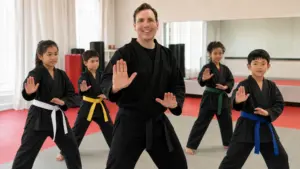
Kids martial arts in North Royalton can offer a structured setting for practicing routine, goal-setting, and self-control alongside a supportive instructor. Progression through belts gives kids a visible way to track effort over time, which reinforces the same confidence-building habits described earlier in this article. It’s a complement to those daily habits, not a substitute for them and it works best when paired with the connection and coping practices your family is already building at home.
What Parents Should Look for in a Safe Martial-Arts Program
A safe program has qualified, background-checked instructors, age-appropriate class structure, and clear anti-bullying and safeguarding policies. Contact should be controlled and consented to, accommodations should be available for different needs, and parents should be able to observe a class before enrolling. First-aid procedures and clear communication practices are non-negotiable basics, not bonus features.
Questions to Ask Before Enrolling
Ask about instructor-to-child supervision ratios, how the program handles a child in distress, what accommodations exist for different learning or sensory needs, and how progress and concerns get communicated to parents. A program that answers these clearly and specifically, rather than vaguely, is one worth trusting with your kid’s time.
What a Parent Should Not Expect From Martial Arts
Martial arts is not a substitute for therapy, psychiatric care, school-based support, or emergency services. It shouldn’t be marketed by us or anyone else as a cure for anxiety, depression, ADHD, autism, or behavioral disorders. It’s a structured activity that can support confidence and routine. That’s a real, valuable thing. It’s just not the same thing as treatment.
What Research Says About Physical Activity and Child Well-Being
The CDC’s overview of children’s mental health lists regular physical activity among the healthy behaviors that may help reduce symptoms and support overall well-being, alongside sleep, nutrition, and strong relationships. Separately, a CDC-published study in Preventing Chronic Disease looked at a nationally representative sample of over 13,000 high school students and found that being physically active five or more days a week, and participating in at least one sports team, were both associated with lower odds of reported depressive symptoms.
What the Evidence Supports
The evidence supports a real association between regular physical activity, sports participation, and better self-reported mood and lower depressive symptoms in adolescents. This is observational data, not a controlled trial of any single activity but it’s a consistent, well-documented pattern across a large sample.
What the Evidence Does Not Prove
This research doesn’t prove that any one activity, including martial arts specifically, treats a mental health condition. It shows association, not causation, and it studied general physical activity and sports participation in high schoolers not a controlled test of a specific martial arts curriculum. Read it as a solid reason to prioritize movement, not as a medical claim.
Parent Experiences at Inspire Martial Arts
Research explains the pattern. Local parents describe what it actually looks like in daily life the small, specific changes they notice once a routine sticks.
Verified Parent Review Quote A
Inspire Martial Arts is fantastic for families. My two sons look forward to their Saturday karate classes every week the owner and instructors create such a positive, fun, and encouraging environment. They teach great life skills along with martial arts, and it’s clear they genuinely care about helping kids grow in confidence, respect, and discipline. Highly recommend.
Verified Parent Review Quote B
A great place for your child to learn karate, teaches good morals and a welcoming environment! Chris is an awesome instructor that the kids look up to along with assistant instructors.
Review Transparency and Context
These are individual experiences, not scientific evidence, and outcomes vary from child to child. They’re worth reading as one data point among many alongside the research above and your own observations of your kid.
How Parents Can Start Today
You don’t need a plan with a hundred steps this week. Pick one habit from each category one connection habit, one coping strategy, one movement activity, one routine tweak and just run those for seven days. Track what you notice, not what you assume.
A One-Week Family Mental-Wellness Plan
Try a nightly five-minute check-in, one outdoor play session daily, a consistent bedtime all seven nights, and one practiced calm-down technique before it’s actually needed. Simple, repeatable, and specific enough that you’ll actually know if it worked.
Choosing the Next Local Activity
Compare local programs, observe a class in person, and ask direct safeguarding questions before signing up for anything. The right activity fits your child’s temperament and interests not just your schedule.
Every family’s starting point looks different, and that’s fine. What matters is picking something consistent and sticking with it long enough to actually see a pattern. If you’re weighing whether a physical, confidence-building activity fits your child, it helps to understand martial arts builds resilience in a practical, day-to-day sense rather than as an abstract promise.
Supporting a child’s mental health isn’t about finding the one right technique it’s about stacking small, boring, consistent habits until they become normal family rhythm. Connection, routine, movement, and coping practice do more heavy lifting than any single program ever will. If you’re in North Royalton and thinking a structured activity like martial arts might fit into that stack, come observe a class at Inspire Martial Arts and ask us your safety and program questions directly we’d rather you make an informed decision than a rushed one.
FAQ Section
How do I know if my child’s anxiety is normal or something more serious?
Occasional worry before a test or a big event is normal. It becomes a concern when it’s persistent, shows up across multiple settings like school and home, and interferes with sleep, friendships, or daily functioning for several weeks. If that’s the pattern you’re seeing, talk to your pediatrician.
What age should my child start martial arts for mental health benefits?
Most programs accept kids starting around age four or five, but the right age depends on your child’s temperament and ability to follow group instruction. A trial class is the best way to see if your specific child is ready, rather than relying on a general age guideline.
Can physical activity replace therapy for a child with diagnosed anxiety or ADHD?
No. Physical activity, including martial arts, can support mood and routine, but it’s not a substitute for therapy, medication, or professional treatment when a child has a diagnosed condition. It works best as a complement to professional care, not a replacement.
How much screen time is too much for a child’s mental health?
There’s no single universal number, but consistent research links excessive, unstructured screen time to worse sleep and mood in kids. A more useful marker than a strict hour count is whether screens are displacing sleep, physical activity, or in-person connection.
What should I do if my child refuses to talk about what’s bothering them?
Keep offering low-pressure openings a car ride, a walk, a shared task instead of a direct sit-down conversation. Many kids open up more easily when they’re not facing you directly and there’s no pressure to perform an answer.
Is it normal for my child to be more anxious after starting a new activity like martial arts?
Some initial nervousness around anything new is common and usually settles within a few classes as routine builds. If anxiety intensifies rather than easing, or your child dreads attending after several weeks, it’s worth a direct conversation with the instructor and possibly your pediatrician.
How can I tell if my child’s teacher or school is a good resource for mental health support?
A responsive school will communicate proactively about behavior or mood changes, not just academic grades, and will involve you in a plan rather than handling concerns unilaterally. Asking directly how the school handles social-emotional concerns is a fair and reasonable question at any conference.