


This article was last updated on August 12, 2026
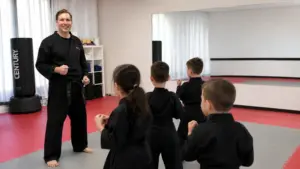
Are Martial Arts Classes Good for Kids?
Yes and not just for the reasons most parents expect. Beyond the kicks and the cool belts, martial arts gives kids a structured place to practice paying attention, controlling their impulses, and treating other people with respect. It rewards effort over natural talent, which means a child who struggles elsewhere can find real footing here. The benefits of martial arts reach well past fitness. At Inspire Martial Arts, character growth and physical growth get equal weight, so your child works on discipline and self-control alongside their front kick.
The Core Benefits Parents Usually Look For
Most parents come in hoping for one or two changes and end up seeing several. Here’s what martial arts tends to build:
- Confidence that comes from earning progress, not empty praise
- Focus that carries into homework and classroom instructions
- Discipline through repetition and clear expectations
- Respect for instructors, peers, and family
- Coordination and body awareness from consistent physical drills
- Resilience after mistakes, missed techniques, and tough test days
- Emotional control when frustration hits
Why Martial Arts Is Different from Regular Team Sports
Team sports are great, but a quieter or less athletic kid can disappear on a crowded field. Martial arts flips that. Progress is personal your child advances at their own pace toward their next belt, and every rank is a goal they earned themselves. There’s no bench, no “sitting out” because they’re not the fastest. That personal accountability suits a lot of children who feel lost in group settings, though the right fit always depends on the individual kid.
How Martial Arts Supports Character Development
The mat is really a training ground for behavior. Kids practice respect by bowing and listening, responsibility by caring for their gear and showing up ready, and perseverance by drilling a technique until it clicks. Those habits travel. Parents often notice a child listening better at home, following classroom routines with less nagging, and handling frustration without a full-blown meltdown. Self-control and goal setting stop being lectures and start being things your child actually does.
How Martial Arts Helps Kids Build Focus and Discipline
Focus isn’t something kids either have or don’t it’s a skill that grows with the right practice. Structured physical training gives children repeated reps at holding attention, following directions, and self-correcting, which is exactly how focus strengthens over time. Researchers at Harvard Health Publishing point to this directly. In their work on executive function in children, they note that physical activity and martial arts support the mental skills kids use to focus, plan, work toward goals, self-regulate their emotions, and adapt to new situations. That’s the science behind what parents see week to week.
Martial Arts and Executive Function in Children
Executive function is the brain’s control center it manages attention, working memory, impulse control, and the ability to shift between tasks. A martial arts class demands all of it at once. Kids have to remember a sequence, respond to an instructor’s cue, monitor their own body position, and adjust when they get it wrong. Doing that repeatedly, in a predictable setting, gives those developing skills a real workout.
Focus Improvements Parents Can Notice at School and Home
The changes usually show up quietly, in the details of everyday life. Parents in North Royalton describe exactly that shift one local mother, Joanne, shared that “Master Chris and the entire team are wonderful to work with. They really took the time to get to know our little guy. His concentration and focus have really improved over the last few months and his behavior at school has improved as well.” That’s the pattern: better focus on the mat, better focus at a desk.
Discipline Without Harshness
Discipline in a good program doesn’t mean yelling or punishment. It means consistency, clear expectations, encouragement, and enough repetition that good habits become automatic. That approach helps kids behave from the inside out rather than acting right only when someone’s watching. Children learn to self-correct because they understand why the rules matter, not because they’re afraid.
Can Martial Arts Help Kids with ADHD, ASD, or Anxiety?
For many families, this is the real question. Martial arts isn’t a treatment or a cure, and every child responds differently. But the structure short instructions, clear goals, immediate feedback, and constant movement happens to line up well with what a lot of kids with ADHD, ASD, or anxiety respond to. It gives them a predictable place to practice focus, patience, and self-regulation without the social overwhelm of a big team.
Martial Arts Benefits for ADHD and High-Energy Children
High-energy kids need somewhere to channel it productively, not just burn it off. The research on martial arts for ADHD children points to why the format works: structured movement, bite-sized short-term goals, steady repetition, and instructor feedback that lands right away. Kids get to move constantly while still practicing stillness and control, which is a hard balance to find anywhere else.
Support for Children Who Need Extra Patience
Some kids simply need instructors who won’t give up on them. One North Royalton parent put it plainly: “We came to Inspire Martial Arts in search of an activity to help our son build esteem and focus. My son has asd/adhd and this place has been crucial to my son’s development. The staff is very supportive and very well trained to deal with kids that need the extra help. Here my son has learned the value of persistence.” Supportive, trained coaching makes the difference for children who’ve struggled to fit in elsewhere.
Helping Anxious or Shy Kids Build Confidence Gradually
Nervous kids don’t need to be thrown into the deep end. They need small, winnable moments. Learning a first stance. Getting praised for effort, not perfection. Practicing inside a class format that looks the same every time, so there are no surprises. Bit by bit, that predictability lowers the anxiety, and a shy child starts speaking up and standing taller around peers.
How Martial Arts Builds Confidence and Emotional Resilience
Real confidence isn’t handed out it’s earned through experience. Martial arts gives kids a steady stream of small challenges, honest feedback, and visible progress they can point to. They mess up, they try again, and they watch themselves improve. That loop teaches a child that effort and setbacks are part of getting better, not signs they should quit.
Confidence Through Belt Progression and Small Wins
The belt system is a genius confidence engine. Each rank is a concrete, earned milestone, and a child can see the proof of their work tied around their waist. To build your child’s confidence, nothing beats letting them experience that effort over weeks and months produces a visible achievement nobody can take away.
Learning Persistence When Things Feel Difficult
Persistence is the skill hiding underneath every belt. Kids learn it by trying a technique that won’t cooperate, practicing through the frustration, and sticking with it long enough to finally nail it. That’s precisely what the North Royalton parent above described when she said her son “learned the value of persistence.” He didn’t get it in a day he got it by not quitting.
Emotional Control During Challenges
The mat is where kids rehearse handling hard feelings. Frustration when a move won’t click, disappointment after a tough belt test, the urge to give up they meet all of it in a controlled setting. Over time, those reps translate into calmer responses to tantrum triggers, peer conflict, and school stress. Self-control stops being something you demand and becomes something your child owns.
What Should North Royalton Parents Look for in a Kids Martial Arts Program?
Not every martial arts school is built the same, and the sign out front tells you almost nothing. Before you enroll, it helps to know what actually separates a great kids’ program from a mediocre one. A few clear questions make the decision much easier and if you want a deeper checklist, this guide on how to choose the right karate class walks through the specifics.
Instructors Who Understand Children
The instructor makes or breaks the experience. At Inspire, Master Chris and the team are known for patience, encouragement, and age-appropriate expectations. Good instructors read a room full of different personalities and adjust firm with the kid who tests limits, gentle with the one who’s scared to try. They also keep parents in the loop instead of leaving you guessing.
A Safe, Structured Class Environment
Safety is a fair concern, and a strong program answers it before you ask. Look for close supervision, clear class rules, controlled drills, and techniques matched to your child’s age and size. A quality school draws a hard line between learning martial arts and acting aggressively the whole culture points kids toward self-control, not toward throwing punches on the Playground.
A Program That Builds Life Skills, Not Just Kicks and Blocks
The best programs treat physical technique as the vehicle, not the destination. Respect, discipline, focus, confidence, responsibility, perseverance, and self-control are the real curriculum. Watch for a school that intentionally connects mat behavior to home and school behavior, because that transfer is the entire point.
Convenient Local Fit for Families in North Royalton, Ohio
Practical fit matters too. Families across North Royalton look for a structured after-school activity that supports a steady school-year routine and sits close enough to home to attend consistently. Consistency is where the results live, so an easy commute isn’t a small thing it’s what keeps your child showing up.
Common Parent Concerns About Martial Arts for Kids
Every parent walks in with a few worries, and honest answers matter more than a sales pitch. Here are the concerns that come up most.
Will Martial Arts Make My Child More Aggressive?
No good programs do the opposite. Quality children’s martial arts centers on respect, self-control, discipline, and listening, and it teaches kids that skills come with responsibility. Children learn when force is never appropriate and how to walk away, which usually makes them calmer, not more combative.
Is My Child Too Young to Start Martial Arts?
Readiness depends more on the child and the program than on a birthday. A well-run school offers age-appropriate classes built around short attention spans and simple goals. The best test is a trial class watch how your child responds rather than relying on an age chart.
What If My Child Is Shy or Nervous?
Shy kids often thrive here once the pressure is off. Predictable routines, encouraging instructors, small-group interaction, and praise for effort give a nervous child low-stakes chances to succeed. Confidence tends to build slowly and then all at once.
What If My Child Quits Activities Easily?
That’s common, and the structure is designed for it. Consistency, clear belt goals, and steady encouragement give kids a reason to push through the point where they’d normally bail. Learning to stick with something hard is one of the most valuable habits a child can carry out of the dojo.
Why Local Parents Choose Inspire Martial Arts in North Royalton
Reputation in a community like this gets earned one family at a time. What keeps North Royalton parents coming back to Inspire is simple: Master Chris and the team deliver real, specific changes in kids, and they support each child as an individual. The reviews below aren’t marketing they’re parents describing what they saw.
Parent-Reported Improvements in Focus and School Behavior
The before-and-after is what stands out. Families consistently mention sharper concentration, steadier focus, and noticeably better behavior at school within a few months of starting the exact outcome Joanne described about her “little guy.”
Supportive Coaching for Different Learning Needs
Inspire has become a go-to for families whose kids need extra patience. Parents of children with ASD and ADHD point to supportive, well-trained staff who help their kids build esteem, focus, and persistence instead of feeling like a problem to manage.
A Local Activity That Supports the Whole Child
For a lot of North Royalton families, Inspire is more than an activity it’s a program that supports their child physically, emotionally, socially, and behaviorally, all in one place close to home.
Visit Inspire Martial Arts in North Royalton
Martial arts gives kids something most activities can’t: a structured, encouraging place to build confidence, focus, discipline, respect, and emotional control skills that follow them home and into the classroom. It rewards effort, meets each child where they are, and turns small wins into lasting self-belief. If you’ve been searching for an activity that actually changes how your child handles the hard stuff, this is worth a look.
Come see it for yourself. Schedule an introductory class at Inspire Martial Arts in North Royalton and let Master Chris and the team show your child what steady effort feels like.
Frequently Asked Questions
What age can my child start martial arts in North Royalton? Many kids start between ages 4 and 6, but readiness depends on maturity and the program’s structure more than exact age. A school with age-appropriate classes and experienced kids’ instructors can work with very young children. Try an introductory class to see how your child responds firsthand.
How many days a week should a child do martial arts? Most kids do well starting with one to two classes per week, which builds routine without overloading a busy school schedule. Consistency matters far more than frequency early on. You can add days as your child’s interest and commitment grow.
Is martial arts good for kids with ADHD? For many children with ADHD, the structure, constant movement, short goals, and immediate feedback line up well with how they learn. It may help them practice focus, self-control, and persistence, though every child responds differently and it isn’t a medical treatment. Talk with the instructor about your child’s specific needs.
Does martial arts really help with confidence? Yes, because confidence here is earned rather than handed out. Belt progression, instructor encouragement, and visible improvement over time show a child that effort produces results. That real evidence tends to build steadier self-esteem than praise alone.
Will my child get hurt doing martial arts? Reputable programs prioritize safety through close supervision, controlled drills, clear rules, and techniques matched to a child’s age and size. Minor bumps can happen in any physical activity, but serious injury is uncommon in well-run kids’ classes. Ask any school about their safety practices before enrolling.
How much do kids martial arts classes cost in North Royalton? Pricing varies by program, schedule, and included gear, so it’s best to ask directly. Many schools, including Inspire, offer an introductory class so you can judge the fit before committing. Weigh cost against the instructor quality and structure the program offers.
How long until I see changes in my child’s behavior? Many parents notice improvements in focus, listening, and attitude within the first few months of consistent attendance. The pace depends on the child and how regularly they attend. Steady, weekly participation produces the most reliable results.