


This article was last updated on August 03, 2026
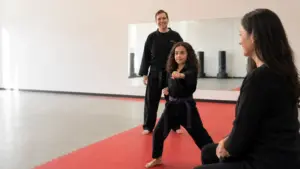
Table of Contents
- What Is a Supportive Karate Parent?
- Why Kids Quit Karate: Pressure, Burnout, and the Car Ride Home
- What Parents Should Say Before and After Karate Class
- How Supportive Parenting Builds Motivation, Confidence, and Self-Discipline
- The Science Behind Martial Arts, Focus, and Executive Function
- How Inspire Martial Arts Supports Parents and Kids in North Royalton
- What to Do If Your Child Wants to Quit Karate
- People Also Ask: Karate Parent Questions
- Conclusion
- FAQ Section
You watched your kid nail a kick in the driveway all week, then freeze up the second class started. The urge to lean over and whisper “elbow up, chin down” is almost physical. Most parents mean well when they coach from the sidelines or replay every mistake on the ride home, but that instinct often does the opposite of what we hope.
Key Takeaways
- A supportive karate parent encourages effort over results, lets the instructor handle technical corrections, and tells their child, “I love to watch you practice.”
- The fastest way to make a child quit karate is turning the car ride home into a critique session; keep post-class talk light and let your child lead.
- Kids stay motivated in martial arts when the activity feels like their own choice, so praise consistency, courage, and improvement instead of belts or trophies.
- Watch for anxiety, stomachaches before class, or lost joy as signs you may be pushing too hard rather than supporting.
What Is a Supportive Karate Parent?
A supportive karate parent encourages effort, trusts the instructor to teach technique, skips the sideline coaching, and reminds their child, “I love to watch you practice.” That’s the whole job. It sounds almost too simple, but it runs against nearly every instinct we have as parents who want our kids to succeed. Your role isn’t to be a second Sensei. It’s to be the steady, calm presence that makes the dojo feel safe to fail in.
The 6 Magical Words: “I Love to Watch You Practice”
Those six words work because they reward the thing your child actually controls: showing up and trying. Notice what they don’t say. They don’t mention winning, belt rank, or how a technique looked. When a child hears “I love to watch you practice,” they learn that your approval isn’t tied to performance. That single shift lowers the pressure and, ironically, makes them want to try harder.
Why This Matters for North Royalton Families
Parents across North Royalton and nearby Broadview Heights and Strongsville sign their kids up for karate hoping for confidence, focus, and discipline. Those outcomes are real, but they grow best in a low-pressure setting. Families here aren’t chasing trophies. They want a kid who handles frustration better at the dinner table and walks into school a little taller.
Why Kids Quit Karate: Pressure, Burnout, and the Car Ride Home
Most kids don’t quit karate because they stop liking it. They quit because it stops feeling fun and starts feeling like a test they might fail. Research on youth martial arts backs this up. A study published in Frontiers in Pediatrics found that structured martial arts training improved kids’ self-esteem, reduced aggression, and sharpened their ability to control impulses. Those benefits show up when training stays positive. Pile on pressure, and you smother the very growth you signed up for.
The Car Ride Home Mistake Many Parents Make
The car ride home is where good intentions go to die. Your child climbs in, still processing class, and the first thing they hear is a breakdown of what they did wrong. Even gentle correction lands as criticism in that moment. Instead of reaching for feedback, reach for connection. Learning better questions to ask your child turns that drive into a conversation your kid actually wants to have.
Signs You May Be Pushing Too Hard
Kids rarely announce that they feel overwhelmed. They show it. Watch for these signals:
- Stomachaches or headaches right before class
- Sudden excuses to skip practice
- Looking over at you after every single move
- Getting visibly anxious after a mistake
- Losing the spark they used to have on the mat
How to Avoid Youth Sports Burnout
Preventing youth sports burnout comes down to protecting the joy. Keep karate as one part of a full childhood, not the center of it. Let some weeks be low-key. Resist the urge to add private lessons or extra drilling unless your child asks for them. When practice stays their choice, motivation lasts for years instead of months.
What Parents Should Say Before and After Karate Class
The words bookending each class matter more than parents realize. Before class, your child needs calm. After class, they need space. Get these two moments right and you’ve handled most of your job as a karate parent. The goal is simple language that signals love without adding weight. Save the analysis for the instructor.
Before Class: Keep It Simple and Calm
Right before class, keep it short and warm. “Have fun.” “Do your best.” “I love you.” That’s plenty. Skip the last-minute technical reminders about keeping their guard up or remembering their form. That’s the instructor’s territory, and piling it on just makes your child nervous walking through the door.
After Class: Let Your Child Lead the Conversation
After class, let your child steer. If they want to talk, listen. If they’re quiet, let them be quiet. Supporting your child’s journey means empowering without taking over, which means resisting the urge to fill every silence with feedback. Their experience belongs to them.
What Not to Say After a Tough Class
Some phrases quietly chip away at a kid’s confidence. Try to retire these:
- “Why didn’t you try harder?”
- “You should have listened better.”
- “You’ll never get your next belt like that.”
None of these help, and all of them tell your child that your reaction depends on their performance. Swap them for curiosity: “What was the hardest part today?”
How Supportive Parenting Builds Motivation, Confidence, and Self-Discipline
Here’s the part that surprises parents most: backing off produces bigger results than leaning in. When you create a low-pressure environment, kids relax enough to take risks, and that’s where real growth happens. Parents in North Royalton describe exactly that shift. One local dad shared that his son’s “confidence and self discipline have sky rocketed through the roof,” and that he “could not have asked for a better experience.” That kind of change rarely comes from pressure. It comes from safety.
Intrinsic Motivation: Helping Kids Want to Practice
Child motivation in martial arts sticks when it comes from inside. External rewards like stickers and belts work for a while, then fade. What lasts is a kid who trains because they want to. You can build self-motivated kids by giving them ownership over their practice and letting them feel the pride of their own progress.
Confidence Grows When Effort Is Praised
What you praise is what your child chases. Praise the belt, and they’ll fear losing it. Praise the effort, the courage to try a hard move, the choice to keep going after a stumble, and you build your child’s confidence on solid ground. Effort is something they can repeat every single day. A trophy sits on a shelf.
Self-Discipline Comes From Ownership
Self-discipline doesn’t grow from a parent’s nagging. It grows when a child feels responsible for their own progress. The North Royalton dad who watched his son’s discipline “sky rocket” wasn’t drilling him at home. He let his son own the work, and the instructors handled the coaching. Ownership is the engine. Your job is to stay out of the way of it.
The Science Behind Martial Arts, Focus, and Executive Function
Parents often notice their kid concentrating better after a few months of karate, and there’s real research behind that hunch. A peer-reviewed study in the National Library of Medicine, Sports, Executive Functions and Academic Performance, found that kids who practiced martial arts showed stronger executive function and higher school marks than children in team sports or no sport at all. That’s not a promise of straight A’s. It’s evidence that the structure of martial arts trains the brain in ways that carry over to the classroom.
Why Karate Helps Children Practice Focus
Karate trains attention without a worksheet in sight. Kids listen for instructions, wait their turn, repeat forms until they stick, and control their movements on cue. Each of those is a rep for the brain’s focus muscle. Over time, sitting still and following directions gets easier because they’ve practiced it in a setting they enjoy.
How Structure Supports Behavior at School and Home
The structure of a good dojo tends to follow kids home. One North Royalton mom put it plainly: after a few months with Master Chris and the Inspire Martial Arts team, her son’s “concentration and focus have really improved” and “his behavior at school has improved as well.” That carryover is the whole point. What kids practice on the mat becomes how they handle themselves everywhere else.
The Parent’s Role in Reinforcing Focus Without Nagging
You reinforce focus best by staying calm, not by policing it. Nagging about homework or practice teaches kids to tune you out. Instead, notice and name the focus you see: “You really stuck with that form tonight.” Quiet acknowledgment helps your child internalize the skill instead of resenting the reminder.
How Inspire Martial Arts Supports Parents and Kids in North Royalton
A good martial arts school works as an extension of your parenting, not a replacement for it. At Inspire Martial Arts, the emphasis sits squarely on character, confidence, and the life skills that outlast any tournament. That alignment between what happens at home and what happens in the dojo is what makes the difference for local families.
Local Parent Proof: Master Chris and the Inspire Team
The value parents talk about most often isn’t the kicks. It’s the growth underneath. One North Royalton mother noted that beyond the physical side, “there are so many mental aspects and life lessons” her daughter learned, and that “the leadership abilities and confidence she has learned is something she could have never learned at this age.” She credited Master Chris directly. That’s the kind of development that keeps families coming back.
Why Instructor-Parent Alignment Matters
Corrections should come from one voice. When the instructor teaches technique and you provide encouragement, your child never gets caught between conflicting instructions. Let Master Chris and the team handle the front kick. You handle the “I love to watch you practice.” The two roles work best when they stay distinct.
What Progress Really Looks Like in Kids Karate
Progress in karate isn’t a straight line, and knowing what progress really looks like saves parents a lot of worry. Kids plateau. They have off weeks. A green belt might struggle with something they nailed as a white belt. That’s normal. Growth in martial arts happens in fits and starts, not on a schedule.
What to Do If Your Child Wants to Quit Karate
Almost every karate kid says “I want to quit” at some point. The words feel alarming, but they rarely mean what parents fear. Before you cancel the membership or force them to stick it out, slow down. The reason behind the request matters far more than the request itself.
Ask Why Before You Decide
Start with a real question, not a reaction. Is your child tired? Embarrassed after a rough class? Bored, scared of a new skill, or just hitting a plateau? Each of those has a different fix, and none of them require quitting. Get curious before you get decisive.
Recognize the Difference Between a Dip and a True Mismatch
A dip is temporary. A true mismatch is ongoing distress. Plateaus and boredom pass, usually within a few weeks, and pushing gently through them builds resilience. But if your child shows real, lasting anxiety, that deserves your attention and respect. Skip the guilt trips either way. They only make the decision harder for your kid.
Use a Short-Term Commitment Instead of a Power Struggle
When you sense a dip rather than a real problem, offer a bridge instead of an ultimatum. “Let’s finish this month and talk again” keeps your child’s autonomy intact while giving the low mood time to lift. Most kids rediscover their spark once the pressure of a permanent decision is off the table.
People Also Ask: Karate Parent Questions
Parents in North Royalton search these questions constantly, so here are quick, honest answers.
What should I say to my child after karate class?
Say “I love to watch you practice” and ask if they had fun. Keep it light and let your child lead the conversation. Skip the corrections unless they specifically ask for your feedback.
How do I motivate my child to keep going to karate?
Praise effort instead of results, keep practice playful, and let the instructors handle technique. Give your child ownership over their training so it feels like their choice, not a chore you’re enforcing.
Should I correct my child from the sidelines?
No. Sideline coaching confuses your child and undermines the instructor’s teaching. Be a supportive observer during class and let the professionals handle the technical corrections.
Conclusion
Being a supportive karate parent isn’t about knowing more karate. It’s about knowing when to step back, praise the effort, and let your child own the journey. Trust the instructors with the technique, protect the joy that keeps kids coming back, and lean on those six words when you’re tempted to coach. Do that, and you’ll raise a kid who trains for years, not weeks.
Ready to see supportive coaching in action? Visit Inspire Martial Arts in North Royalton and watch a class. Notice how the instructors talk to the kids, how corrections are delivered, and how confidence builds on the mat. Schedule a visit and see whether it’s the right fit for your family.
FAQ Section
How much does kids karate cost in North Royalton, Ohio? Pricing varies by program length and how many classes per week your child attends. Most local schools, including Inspire Martial Arts, offer an introductory trial so families can test the fit before committing. Contact the school directly for current rates and any new-student specials.
What age should a child start karate? Many schools accept kids as young as four, with age-specific curriculums for preschoolers, elementary-age kids, and teens. The right starting age depends on your child’s attention span and interest more than a strict number. A trial class is the best way to gauge readiness.
How long does it take to earn a black belt in karate? For most kids training consistently, a black belt takes roughly three to five years, depending on the school’s curriculum and the child’s pace. Rushing the process misses the point. The years of practice are where the real character growth happens.
Is karate good for kids with ADHD or focus challenges? Many parents find martial arts helps kids who struggle with focus, since the structure, clear expectations, and physical movement channel energy productively. The routine of listening, waiting, and repeating builds attention over time. Talk with the instructor about your child’s specific needs before enrolling.
How often should my child attend karate class? Two classes a week is a common sweet spot for steady progress without burnout. Once a week works fine for younger or newer students. Let your child’s energy and interest guide frequency rather than pushing for more before they’re ready.
What should my child wear to their first karate class? For a first or trial class, comfortable athletic clothing and bare feet are usually fine. The school will provide a uniform, called a gi, once your child enrolls. Check with the front desk ahead of time so you arrive prepared.
Will karate make my child more aggressive? No. Quality martial arts programs teach discipline, respect, and self-control, and research shows training tends to reduce aggression rather than increase it. Kids learn that their skills carry responsibility and are meant for defense, not starting fights.