


This article was last updated on May 30, 2026
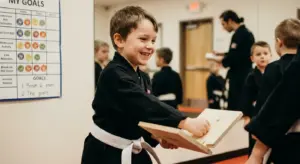
Table of Contents
- Why Goal-Setting Matters for a Child’s Development
- How to Set Age-Appropriate Goals for Kids (By Stage)
- How Parents Can Support Goals (Without Taking Over)
- Handling Setbacks: Building Resilience Along the Way
- How Martial Arts Reinforces Goal-Setting in Kids
- What North Royalton Parents Are Saying
- Conclusion & Next Step
- Frequently Asked Questions
Every new year (or new school term) tempts us to make big promises exercise daily, save more, lose weight only to drift off track within weeks. Kids notice when we quit. The good news: when you help your child set age-appropriate goals that match where they are developmentally, you give them a skill that sticks for life. This guide blends practical parenting tips with child-development science so you can help your child build focus, confidence, and grit one small win at a time.
🔑 Key Takeaways
Age matters most: A 4-year-old needs “put toys in the bin”; a teen can manage “raise my math grade by one letter.” Matching goals to developmental stage is the #1 success factor.
Effort beats outcome: Praising the process (“you practiced every day”) builds resilience and self-efficacy more than praising the result.
Small wins rewire the brain: Each completed mini-goal releases dopamine and strengthens the brain’s planning and self-control systems.
Parents guide, not dictate: Let kids choose goals tied to their own interests for far stronger motivation.
Why Goal-Setting Matters for a Child’s Development
Goals do more than teach kids to finish tasks they shape thinking, self-control, and resilience. According to the Harvard Center on the Developing Child, achieving small early challenges strengthens executive function the mental skills behind planning and problem-solving. Each “small win” releases dopamine, the brain’s reward chemical, signaling that effort is worthwhile.
This is why early goal-setting pays off long after the goal itself is forgotten. A child who learns to set, pursue, and adjust goals is practicing the same skills they’ll use to study for exams, manage money, and navigate careers. If your child struggles to stick with anything, our guide on building perseverance in kids pairs perfectly with this one.
How to Set Age-Appropriate Goals for Kids (By Stage)
The single biggest mistake parents make is setting goals that don’t fit the child’s age. Here’s how to match goals to each developmental stage.
Preschoolers (Ages 3–5): Simple, See-It-Now Goals
Stick to concrete tasks they can see and finish quickly:
-
“Put your toys in the bin after playtime”
-
“Try one new vegetable this week”
Use visual trackers like sticker charts, and keep goals short so frustration doesn’t set in. At this age, the goal is the lesson they’re learning that effort leads to a result. For more on shaping behavior at this stage, see how to get children to behave from the inside out.
Elementary (Ages 6–9): Short Weekly Goals
Try simple weekly goals with easy-to-measure results:
-
“Read for 20 minutes a day”
-
“Practice piano 15 minutes, 4 times a week”
The Cleveland Clinic recommends experience-based rewards (a favorite family activity) over toys or gifts. This is also a great age to nurture follow-through; our post on 11 easy tips that will help your kids be successful gives parents simple routines that work.
Tweens (Ages 10–13): Skill-Based & Social Goals
Encourage skill goals they can pursue with a friend:
-
“Join one school club this semester”
-
“Save up for 3 months to buy a bike”
Research shows social check-ins help tweens follow through. This stage is also when consistency becomes a challenge, so strategies to motivate your child for consistent attendance can keep them showing up to the activities tied to their goals.
Teens (Ages 14+): Long-Term, Self-Directed Goals
Let teens own longer-term goals:
-
“Volunteer 10 hours a month at an animal shelter”
-
“Raise my math grade from a B to an A- by semester’s end”
The Cook Center finds that teen goal-setting supports identity development and future-focused thinking. For a deeper framework, goal setting for kids: how to unlock your child’s full potential walks through the full process.
How Parents Can Support Goals (Without Taking Over)
Your job is to coach, not command. Three principles make the difference:
-
Follow their interests. Instead of choosing goals for them, ask: “What’s something you think is cool or want to get better at?” Ownership fuels motivation.
-
Break it down. Turn big dreams into small steps. Want a puppy? They can research the breed, list the costs, and do chores to prove responsibility. This is a natural way to teach how to teach children responsibility.
-
Track the steps. Use checklists, a small journal, or an app like Habitica together.
Knowing how you respond matters too our guide on empowering vs. enabling: the fine line of parenting helps you support without rescuing. And the way you talk about goals counts; try the prompts in the best questions to ask your kid instead of “how was your day?”
Handling Setbacks: Building Resilience Along the Way
Goals stall that’s normal and even useful. When they do:
-
Normalize the struggle. Share age-appropriate stories of your own challenges.
-
Pivot, don’t quit. Adjust the timeline or method. Couldn’t save the allowance? Talk through budgeting tweaks.
-
Celebrate effort. “You practiced every single day look how far you’ve come!” matters more than the outcome.
A review in Child Development Perspectives on resilience through problem-solving found that kids who work through obstacles develop stronger academic and social skills later. For practical coping tools, see resilience: helping children and teens build coping skills and the encouraging reminder in if at first you don’t succeed.
How Martial Arts Reinforces Goal-Setting in Kids
Few activities teach goal-setting as naturally as martial arts. The belt system turns a long journey into a ladder of clear, achievable milestones exactly the “small wins” the brain craves.
At Inspire Martial Arts, Chris Gehring’s Life SKILL program builds this in by design. Students set belt-level goals broken into weekly skills, with age-banded curricula:
-
Little Dragons (3–6): Following instructions and taking turns
-
Juniors (7–12): Building teamwork through partner drills
-
Teens (13+): Developing leadership through assistant teaching
A 7-year-old might aim to master three kicks in a month; a teen might plan a leadership project. This is why age-specific curriculum matters so much goals only work when they fit the child. If you’re new to it, what to expect from your new ninja explains how progress unfolds, and 7 things kids learn from martial arts shows how the lessons reach far beyond the mat.
The lasting payoff? Self-efficacy. The American Psychological Association links childhood goal-setting to adult skills like time management and grit. By celebrating effort over outcome, we teach kids that growth itself is the real victory.
What North Royalton Parents Are Saying
Honest parent feedback says it best. Here’s what local families share in their Google reviews of Inspire Martial Arts:
“The staff does an excellent job of working with my son. My son’s confidence and self-discipline have skyrocketed through the roof. I could not have asked for a better experience for my child.” Tony Virovec
“Master Chris and the entire team are wonderful to work with. His concentration and focus have really improved over the last few months, and his behavior at school has improved as well. Definitely worth the investment.” Joanne Asmis Sitaras
“Most don’t realize that besides the physical part there are so many mental aspects and life lessons that she has learned. The leadership abilities and confidence she has gained is something she could never have learned at this age.” Kelly Buzinski
These stories reflect exactly what goal-setting builds: focus, discipline, and confidence that carry into the classroom and beyond.
Conclusion & Next Step
Helping your child set age-appropriate goals isn’t about producing a list of achievements it’s about teaching a lifelong skill. Match the goal to the age, let your child own it, celebrate effort over outcome, and treat setbacks as part of the path. Start small this week: pick one goal together and track it.
Next step: Want a structured environment where your child practices goal-setting every class? Explore Inspire Martial Arts’ programs in North Royalton, Ohio and book a trial to see the belt-goal ladder in action.
Frequently Asked Questions
At what age can children start setting goals?
As early as age 3. Preschoolers can handle simple, visible goals like putting away toys, using sticker charts to track success. The key is keeping goals short and concrete.
What is an age-appropriate goal for a child?
One that matches their developmental stage: see-it-now tasks for preschoolers, short weekly goals for elementary kids, skill-based goals for tweens, and longer self-directed goals for teens.
How do I motivate my child to stick with a goal?
Tie the goal to their own interests, break it into small steps, track progress together, and praise effort rather than just results. Experience-based rewards work better than toys.
What should I do when my child gives up on a goal?
Normalize the struggle, adjust the timeline or approach instead of quitting, and celebrate the effort already made. Setbacks are a normal, valuable part of learning resilience.
Should I set goals for my child or let them choose?
Let them choose whenever possible. Ownership dramatically increases motivation. Your role is to guide, break goals into steps, and help track progress not to dictate.
How does martial arts help with goal-setting?
The belt system turns a long journey into clear, achievable milestones, giving kids steady “small wins.” Programs like Inspire’s Life SKILL curriculum build weekly, age-banded goals into every class.
How long should it take a child to reach a goal?
It depends on age and goal size. Preschoolers need same-day goals; elementary kids do well with weekly ones; teens can manage goals spanning a semester or several months.