


This article was last updated on February 25, 2026
HTML
Table of Contents
- Why Your Child’s First Thoughts Matter
- What “Thinking Makes It So” Really Means
- Why Gratitude Works So Well for Kids
- Simple Ways to Practice Gratitude Every Day
- How to Help Your Child Shift Negative Thinking
- When Your Child Wakes Up in a Bad Mood
- How Martial Arts Helps Build a Positive Mindset
- Why This Matters More Than Ever
- Final Thoughts: Better Thoughts Lead to Better Days
How your child begins the day can influence the rest of their day. One negative thought in the morning can quickly turn into frustration, poor choices, and emotional overwhelm. With the right mental habits children can be taught to reset, refocus and tackle the day with more confidence.
The practice of Gratitude is one of the easiest ways to make that happen. It assists children in shifting their focus away from what’s bad to what is positive as well as from what’s not there to the things they already have, and shift their focus from emotional reactivity to control.
Here at Inspire Martial Arts, we observe every day how our thinking affects our behavior, efforts and development. If children are taught to control their thinking they grow more resilient, respectful and better equipped for the challenges they face at home, in the classroom, and in their daily lives.
Key Takeaways
- Children’s thoughts at the beginning of the morning can affect their attitude, concentration and behavior throughout the remainder of the day.
- Gratitude can help kids manage stress, increase their perspective and develop emotional strength.
- Small actions like pauses of gratitude and positive self-talk can lead to an ongoing mindset shift.
- Martial arts help to build discipline and self-control, as well as perseverance and an optimistic outlook.
Why Your Child’s First Thoughts Matter
Children often wake up feeling a bit of pressure. Perhaps they’re tired. Perhaps they’re worried about their school. Or maybe they’re trapped in a routine of focusing their attention on what’s frustrating, difficult or uncomfortable.
That first mental focus matters more than most parents realize. If a child begins the day with the thought, “I don’t want to do this,” or “Today is going to be bad,” the thinking can alter their mood, attitude, and choices. Small frustrations can make you feel more overwhelming. An easy correction may feel personal. A typical school day could seem like a fight before it even gets underway.
When a child begins with a positive attitude like “I can handle today,” or “There is something good about this day,” their moods tend to be more steady. They are more likely to respond rather than react.
That is the idea behind ‘thinking makes it so. Thoughts affect emotions. The way we feel affects our behavior. and behavior determines outcomes.
This idea closely connects with your attitude: Stay Your Attitude positive and Something to think about as all of these lessons go to the same basic truth the focus we place on increases.
What “Thinking Makes It So” Really Means
This doesn’t not suggest that the problems are not real. It doesn’t mean that children are to ignore their feelings or pretend that everything is perfect. It’s about changing the mindset of the way that challenges are viewed.
Two children could go through the same experience and react in totally different ways.
One child is thinking:
- “I always mess up.”
- “This is too hard.”
- “I can’t do it.”
Another child imagines:
- “This is hard, but I can learn.”
- “I made a mistake, but I can try again.”
- “I don’t have to quit just because I’m frustrated.”
The problem may be the same however, the results will be quite different.
This is the reason why it isn’t simply a motivating concept. It’s a real-world capability. When children learn to direct their thinking as they think, they increase their control, perseverance and confidence.
This is why we have posts such as Goal Setting Unleash Your Child’s Potential, The Key to Focus and Effort children and teens and 9 Ways to Enhance Your Perseverance Skills are important. They all teach the same fundamental principle that success begins in the mind, before it manifests in the behaviour.
Why Gratitude Works So Well for Kids
The power of gratitude is that it teaches the mind to be aware of what is beneficial and meaningful. It also helps to keep the mind focused on what is constant. It helps to shift attention away from the constant feeling of discontent and assists children in developing a sense of perspectives.
It doesn’t mean they do not have bad days. They just become more prepared to deal with them.
If children regularly practice gratitude and regularly, they are often:
- Less reactive when things go wrong
- More aware of the support around them
- Better at calming down after frustration
- More appreciative of people, opportunities, and effort
- More emotionally balanced in stressful times
The concept of gratitude isn’t just simply a “feel good” habit. It’s a resiliency habit.
It also aids in the kind of emotional development discussed in Resilience helping children and teens Develop Coping Skills, How to talk to children about their big Stress and calming down and 100 Practical Ways to Improve your child’s mental health.
Gratitude can help reduce emotional stress
A child who is stressed is often unable to escape the issue. It is a good idea to break this pattern. Just asking a simple inquiry such as “What is one thing that is still okay right now?” can slow down the spiral of emotions.
Gratitude builds stronger perspective
Children are naturally focused on what is immediate. If they’re upset the feeling could seem to be the entire world. The power of gratitude helps them get through it and remind them that one difficult moment is not the end of the road for the entire day.
Gratitude improves connection at home
Children who are grateful tend to be more inclined to observe the kindness of others. Parents who are grateful tend to correct mistakes with kindness and patience. This helps create a happier family environment. family.
This is a natural match to How to Help Your Child Feel Amazingly Happy: 75 Positive Terms for Children and The Top questions to ask your Child instead Of “How Was Your Day?”.
Simple Ways to Practice Gratitude Every Day
The greatest thing about gratefulness is the fact that it doesn’t need a lot of routine. It is most effective when it’s easy, easy to repeat, and a an integral part of family life.
Here are a few simple ways to express gratitude that are practical.
-
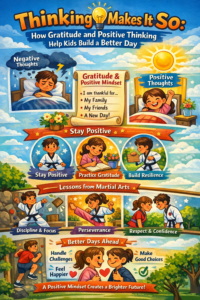
Begin your day by focusing on three positive thoughts.
Before your child reaches for their phone, turns on the television or starts to talk about their problems and ranting, ask them to list three things that they are grateful for.
They could be small:
- My cozy mattress
- Breakfast
- My absolute favorite Hoodie
- My dog
- My classmate from school
Or they could be larger:
- My family
- My health
- A new chance
- A chance to study
This simple habit can help children start their day with gratitude instead of resistance.
-
Utilize the 5-second gratitude pause
If you are feeling stressed, stop for five seconds, and then ask:
- What’s one thing that is going well in this moment?
- What is one thing I still have?
- What is something I am thankful for at this time?
It can be utilized prior to school, after a fight or during homework stress or any time that emotions begin getting out of control.
It’s also a great addition to 75 amazing strategies for calming down for kids (that you’ll want to test!).
-
Do an “I get to” shift
A minor change in words can trigger a huge shift in attitudes.
Instead of:
- “I have to go to school”
Try:
- “I get to go learn”
Instead of:
- “I have to help clean up”
Try:
- “I get to help my family”
Instead of:
- “I have to practice”
Try:
- “I get to improve”
Children learn to view their responsibility as an opportunity and not punishment.
This mindset is a foundational part of lessons on how to teach children to be Responsible and Making Good Decisions.
-
Make an entire household “good things” list
Make a note on your mobile or placed on the refrigerator where family members can write down highlights during the course of their day.
Examples:
- Someone has helped me.
- I remained calm when I was angry.
- We ate dinner together
- I’ve finished something that was hard
- My child has shown kindness today.
In time, this will train all members of the household to be aware of the signs of a problem.
How to Help Your Child Shift Negative Thinking
Children don’t know how to stop negative thought patterns. They require adult guidance to guide them through the process, demonstrate it and repeat it regularly.
The objective is not to stifle emotions. The objective is to help children learn to manage their emotions in a healthy manner.
Help them identify the truth
When children are unhappy and angry, their words are often exaggerated.
- “This is the worst day ever.”
- “Nothing ever goes right.”
- “I can’t do anything.”
Instead of fighting, help them return to the present:
- “This part of your day feels hard.”
- “Something went wrong, but not everything is wrong.”
- “You are frustrated, but you are still capable.”
This helps in teaching emotional accuracy which is an important move towards emotional regulation.
Learn to teach them to find the good things that are still available.
In the midst of a tough moment, ask a few questions, such as:
- What’s one thing that’s not broken?
- Who is here to assist you?
- What were your strengths today?
- What are you thankful today?
This shift in perspective helps to build perspective, without denying emotions.
Model it yourself
Children observe how adults deal with the pressure. If parents constantly complain and then react quickly or rant about any inconvenience, children take note of that behavior.
However, when parents make comments like:
- “That was frustrating, but we can handle it.”
- “This is hard, and I’m still grateful for what we have.”
- “Let’s pause and reset.”
Kids begin to imitate these responses.
This is a reason why books such as Empowering vs. Enabling Empowering vs Enabling – Fine Line of Parenting and how to get children to behave on the inside Out are so important. The process of changing behavior lasts for a long time. the habits that are internal, not only external correction.
When Your Child Wakes Up in a Bad Mood
Every parent has witnessed it. In the morning, a child is upset, angry or even agitated before the day has even begun.
It’s tempting to react to the energy with frustration. However, the best option is to usually guide the process of resetting.
What to say
Try calm, grounding words like:
- “Let’s start fresh.”
- “Take a breath and try again.”
- “What is one good thing about today?”
- “You aren’t quite right this morning. Let’s get it back to normal.”
These words help children feel loved instead of being feeling shamed.
What can you do to Avoid
Beware of phrases that can cause the likelihood of embarrassment or resistance For example:
- “What is wrong with you?”
- “You’re ruining the morning.”
- “Stop acting like this.”
- “You have no reason to be upset.”
Even when children’s behavior is difficult, shame can make it more difficult.
A Simple Morning Reset Routine
Try this simple reset before the start of school:
- Take a deep breath
- Name one thing you are grateful for
- Make a positive choice for the day.
- Take the next right step.
This provides children with a basic way to gain control.
It is also a great complement to other useful parenting tools including the Back-to-School Tips For Parents as well as 11 simple ways to assist your kids to succeed..
How Martial Arts Helps Build a Positive Mindset
We at Inspire Martial Arts, we consider that mental training is as crucial as physical fitness. Martial arts give children opportunities to develop discipline concentration, focus, patience as well as emotional management in real-time.
This is the reason why martial arts are so effective to build character. The kids aren’t just taught to be at ease, be patient and to keep working. They have a space to work on these skills regularly.
Martial Arts Teach Self-Control and Focus
Students are taught to pay attention as well as follow directions and manage their impulses. They are taught that effort is important and that focus leads to improvements.
They are the same inner skills that allow children to reset negative beliefs and make better decisions when under pressure.
To get a more in-depth look at this, check out the 7 Things Kids Learn from Martial Arts and the reasons why Martial Arts Is Great For Your Children.
Martial arts are a way to teach perseverance
It is not possible for a child to master everything in the first attempt. When it comes to martial art, the students are taught to persevere even when things feel difficult or awkward. It can be frustrating, uncomfortable, or even difficult.
This is a way to reinforce the attitude that drives positive thinking:
- I could enhance my performance
- I’m willing to try it again
- I’m able to stay steady
- I am not required to give up because it’s difficult
The lesson is akin to how to persevere and persevere when all you want to do is quit and In the beginning, you Aren’t Successful.
Martial arts teach respect and emotional balance
Positive thinking isn’t solely about confidence. It also involves respect, humility and self-awareness. Martial arts help children understand how to be able to appropriately respond to anger, handle frustration, and be respectful to others.
This is the reason why this topic can be so easily incorporated into martial Arts and the way it teaches Respect and helps children to succeed in life as well. respect: what exactly is it, the different types of examples, how to learn to demonstrate respect.
Martial arts can help children integrate these lessons into everyday life
The true benefit of martial arts isn’t restricted just to mats. That same kid who learns how to remain calm after an error in class can apply that technique at home, in school as well as in social interactions.
This is how mind-training is transformed into life training.
Why This Matters More Than Ever
Children today are constantly confronted with comparison with their peers, constant digital distraction as well as emotional overload and pressure to succeed. If they do not have strong internal abilities it’s not difficult for them to get discouraged or reactive. They can also become mentally exhausted.
This is the reason encouraging gratitude as well as positive thought isn’t an option. It’s important to help children become emotionally well-balanced, confident and resilient.
This is the reason why there are the topics such as How to Help Kids Prepare to thrive in a changing World, Helping Children set appropriate goals for their age and creating a mindset of growth in a Changing World remain important. The world is constantly changing yet children require the same fundamental strengths that they have: discipline, perspective self-control, courage, and perspective.
Final Thoughts: Better Thoughts Lead to Better Days
The reason that thinking simple, yet it is a powerful message. What your child’s attention is influences the way they feel. What they feel impacts the way they behave. How they behave influences the course of their day.
Children can benefit from gratitude as a method of shifting their the negative and get into a positive mindset. It can help them relax and appreciate the things they have and overcome difficulties with greater vigor. It doesn’t erase difficult moments. It assists them in handling these moments more effectively.
If you’re looking to start by making it easy, start with the basics. In the day, prior to when the craziness starts ask your child one question:
What’s one small thing you’re grateful for today?
A single pause can alter the mood of your morning. Small moments like that when repeated repeatedly, could bring about lasting changes.
If you’re looking for your child to develop their mental tenacity martial arts can be one of the best ways to help build determination, discipline, persistence and emotional control every day life.