


This article was last updated on February 10, 2026
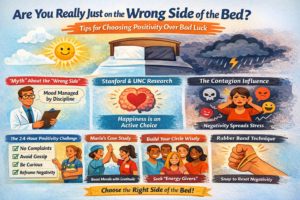
“Ugh, I woke up on the wrong side of the bed today!”
is a common phrase used to justify our moods, inattention, or frustration with life in any given day, that is based on luck or cosmic forces. It is comforting to know that bad days don’t come from our involvement; instead, they simply happen. However, for parents, learning easy ways to help kids handle anger and frustration is often the first step in realizing that these moods can be managed rather than just endured.
The Reality of Moods and Control
Here’s the reality that there is no such thing as sleeping on the wrong side of the bed. Today was a typical day, unless you choose to be convinced contrary. Although external factors like traffic jams, headlines, and family stress could be outside our control, our inner narrative of what has been happening is within our authority. For those trying to balance a busy life, recognizing this is a key resilience strategy to help children and teens build coping skills that last a lifetime.
The “Myth” About the “Wrong Side”
Your mood doesn’t depend on luck, but it can be managed with discipline. “Science of Choice: Studies from Stanford and UNC prove that happiness isn’t only a function of personality; however, it requires disciplined effort on our part to attain satisfaction in life. By teaching these habits early, we prepare kids to thrive in a rapidly changing world by giving them the tools to regulate their own satisfaction.
The Contagion Influence
Being negative produces stress hormones such as cortisol, which adversely affect yourself and the people around you.
Achievable Strategies:
Being negative produces stress hormones such as cortisol, which adversely affect yourself and the people around you. Studies show that those who cultivate a positive attitude experience lower cortisol levels and better cardiovascular health.
Why Are Morning Moods So Dismal?
One of the most common psychological defense mechanisms is to blame our moods on accidents. By externalizing the source (“It’s only one day in a row”), we release ourselves from the responsibility to correct our own mistakes. Yet, this can lead to a self-fulfilling prophecy and guarantees that we will be disappointed in the future.
Why We Blame Bad Luck for Bad Moods
When we awake and immediately blame our luck for any setbacks like oversleeping or not having enough coffee, the mind’s Reticular Activating System (RAS) activates to block out unnecessary information and focus on the most important information – such as the RAS in our brainstem that filters it all out.
If you inform your RAS that “Today is a bad day,” it will then search for evidence of the assertion. You may notice one red light but not four green ones, or hear one snide comment but ignore three compliments. In the end, the RAS isn’t aware of what’s in fact happening, but it will be gathering evidence to support a bad day in the coming days. There is no way to experience such negative experiences, but you will be collecting evidence to prove it!
Coping Skills vs. Bumper Stickers
Life is always throwing curveballs at you, which is a constant factor in the life equation. The way you respond, contrary, can be an independent factor.
Reframing your perspective does not require refusing to acknowledge or engaging in harmful positivity. Instead, it involves acknowledging your challenges and choosing appropriate responses. Ancient Stoicism asserted that we suffer from mental illness, and modern psychology has confirmed that we suffer more in our heads than the reality itself. Knowing that you can switch sides between 10:00 am, 22:00 pm, or 8:20 PM can aid in regulating your emotional balance.
Stanford as Well as Harvard Research
Stanford as well as Harvard research has proven that happiness is an active choice. Stanford and Harvard research have given concrete proof that philosophers and theologians have always believed that happiness is something you decide to choose rather than a random event.
Resilience to mental stress is an important talent, like playing tennis or acquiring a new language. Studies show that those who cultivate a positive attitude, can reframe obstacles and stop engaging in negative self-talk, experience lower cortisol levels, have stronger relationships, and better cardiovascular health in the process.
Dr. Barbara Fredrickson and Her “Broaden-and-Build” Theory
One of the most convincing pieces of evidence is directly from Dr. Barbara Fredrickson, a psychologist at UNC Chapel Hill, who created her “Broaden-and-Build” Theory, which is based on the belief that, while negative feelings (fear or anger) limit our attention to survival in the immediate (fight or flee), positive emotions expand the scope of our focus by expanding or creating.
Positive emotions like happiness, excitement, contentment, and love can broaden our perspectives and inspire new, varied, and exploratory ideas and actions. With time, this increased behavior repertoire helps build skills and develop resources. Simply put, being optimistic increases cognitive capacity by increasing the capacity to discover solutions to complex issues and communicate with other people.
True Joy and Toxic Positivity
Real joy and toxic positivity are not about putting on a fake smile and pretending that everything is perfect or even denying.
True positivity means admitting your faults without the need to allow them to define your character. It is a skill to maintain two different truths at once: “This situation is difficult, and I’m competent to handle the situation.”
Brene Brown is a master at capturing this subtlety. She points out that joy is not just the experience of joy but is a way of life, since joy “is a function of gratitude, which in turn requires courage.” In an incredibly chaotic world, it takes a lot of determination to see past the things that are broken and instead focus on the things that work instead.
True positivity means admitting your faults without allowing them to define you. It is a skill to maintain two different truths at once: “This situation is difficult, and I’m competent to handle it.” This is the same mindset we use when looking for ways to build a child’s confidence; it’s not about ignoring the struggle, but mastering the response.
The 24-Hour Positivity Challenge
What to do to reset your mindset only succeeds with regular practice. To break out of the “wrong side of the bed” story and alter neural pathways away from negative thought patterns, it is necessary to change your thought patterns. Commit to a day without gossip or criticism. This is a great way to help your kids have a great school year by modeling emotional leadership at home.
Are You Prepared to Put This Approach on the Line?
Start by making a commitment for a single day to these four principles of engagement:
-
There is no need to complain: This could be a bit difficult, and you should not complain about the weather, traffic, or even coworker Zoom calls! When you are tempted to do this, stop and breathe deeply before screaming!
-
Avoid gossip and criticism: Be careful not to criticize or chat with friends at the watercooler. If the discussion turns into negative or abusive, just apologize or change the topic.
-
Make a decision based on curiosity: Instead of labeling those who cut you off or behave in a rude manner as “jerks,” instead question their motives for acting this way – “I am curious about why they’re acting like this? Maybe it’s because of something urgent going on.”
-
Change your negative thoughts: Learn to recognize and redirect your negative internal monologues. Instead of telling yourself “This day is ruined,” consider “This is just an initial rough start; what can I learn here?” (Read the story of how a Chicago nurse transformed the culture of their unit for inspiration.). Here’s a case study of a Chicago nurse.
Watch Maria, who is from Chicago, who tackled the challenge during a particularly long shift in her hospital.
“I began this challenge during a double shift when we were understaffed,” Maria says. Instead of complaining about the management, I set out to express my gratitude to my colleagues for their dedication instead. For instance, I awarded an honorary award to one of our younger nurses for her IV skills and also praised another nurse for her IV technique. All of that led to a better mood within our department and laughter amongst our team members during lunch break!
Maria did not adjust the staff’s levels or workload. Instead, she modified the environment to make work manageable.
Negativity Can Spread Like TikTok Videos
A biological reason could be why keeping positive is extremely difficult: negativity spreads quickly. A study conducted by researchers at the University of California demonstrated that listening to someone’s complaint triggers the same stress response in your brain that you experience being directly in the experience, with cortisol (the stress hormone) released by your body to eliminate neurons in the hippocampus (a part of your brain that is responsible for problem-solving). Participation in the “complaint circle” damages your brain’s capacity to concentrate and should be avoided at all times.
Just as we teach empowering kids to prevent bullying, we must empower ourselves to seek “Energy Givers” instead of “Energy Vampires
Breaking the Cycle in a Polarized News Culture
America is known for being a hyper-kinetic, highly polarized, and divisive culture. The collective angst can rapidly spiral downwards depending on the issue, whether it’s politics, inflation, or our endless laundry pile; we’re always primed for anger and conditioned to react in a manner that is logical.
Step Up Your Game Now: Practical Strategies
What can we do to quickly change our thinking when things seem chaotic? Fortunately, pattern interruptions can help. They offer immediate solutions by both mentally and physically breaking the negative cycle within our bodies and minds.
1. The 5-Minute Morning Mindset
Exercise could be the perfect solution to keep negative energy out of your body.
A majority of people wake up and go to their phones just before they step on the floor to fill their minds with people’s issues before even getting up.
Begin your day with a bang: Make sure you don’t check your mobile for the first 5 minutes. Instead, focus on one small thing that makes you happy, like the aroma of freshly brewed coffee or the dawn colors. This habit teaches your RAS to search for opportunities rather than obstacles when you step out of the front of your house.
2. Create “No Complaint Zones” at Home
Spatial anchoring is a highly effective psychological method. For effective use, you should declare your kitchen table or commute as a “Complaint-Free Zone.”
The Steps: When you are in these environments, be sure to discuss issues while staying focused on finding solutions, not just venting. If you notice yourself complaining too frequently or getting angry in these settings, leave the room immediately or place one dollar in a container to punish yourself for your actions.
3. Change the Script about Stress
Check your internal questions that pop up frequently in your daily life.
Instead of thinking “Why is this happening to me?” ask yourself instead, “What am I learning from this experience?” The deadline for a project doesn’t have to be considered an obstacle, but rather an opportunity to develop and build skills. A disagreement doesn’t necessarily mean defeat, but rather serves as a chance to practice communication and patience.
4. Build Your Circle by Seeking Energy Givers
Jim Rohn once famously noted that we’ll be like the average of the five people with whom we spend the most time.
To tackle this issue, limit your time with pessimists who are chronically negative (“Energy vampires”). To counter this, look for friends who blend optimism and realism. They affirm, “This isn’t right, but we’ll get it figured out.” They are called Energy Givers.
5. Rubber Band Technique for Interrupted Patterns
Sometimes, we require physical reminders. Rubber bands can provide an effective physical reminder.
Wrap an elastic band on your wrist.
If you are feeling overwhelmed or unhappy with your life, simply take the band off gently. It helps you return to the present moment while also acting as a physical reminder to reset.
Resilience in Crisis: Navigating Life’s Storms Gracefully
It is crucial to realize that a “bad day” can be justifiable: work ends, relationships fall apart, and health issues arise… Being positive does not mean that you avoid suffering—it’s about refusing to let it define you or the story you tell.
Refusing to Let Pain Tell Your Story (Lessons from a Veteran)
Learn from James, the Texas veteran, who sustained an injury that was irreparably damaged: “After an accident of my own, I had a right to express my frustration. But it did not help my leg. Therefore, I sought some comfort by working at a food bank. Serving others was a way to fulfill a need which self-pity can’t.”
The Ripple Effect: How Your Attitude Shapes Your Community
In a country that is becoming increasingly polarized, small positive actions can have a huge ripple effect. People believe they have to change everything at once, but all they have to do is alter our interactions with our cashiers, neighbors, and motorists who might drive by us.
Fred Rogers famously said it best: “Search for people who can help (not the Helpers!). Equally, become one.”
Conclusion: Your Bed Has Two Right Sides
Your Bed Has Two Right Sides: Two sides to the bed that are equally valid. Pick the one you prefer! Negative thinking can’t make one live a positive life, while an adaptive and resilient outlook can count every day as an achievement toward positive goals. Whether you are a senior citizen or a student, the benefits of martial arts in school and in life start with the decision to get up on the right side.
When the alarm sounds and the groans start to come in, ask yourself the following question: What side of my bed am I settling for today?
Challenge for Readers: Go on the 24-Hour Positivity Challenge with someone else and then share your triumphs (and the mistakes!) on social media using #RightSideOfTheBed. The point isn’t just about weather-proofing; instead, it’s about learning to dance through them and encouraging others to do the same!
Frequently Asked Questions About Your Attitude Keep It Positive
Q) Are You Genetic or Environmental?
While genetics play a major role in the way you feel about yourself (roughly 50 percent), research has shown that around 40 percent of your happiness may be influenced by the deliberate activities and choices you make – there is a way to “train” your brain for more happiness by incorporating practices such as gratitude and reframing.
Q) How can I ensure that I do not wake up on the wrong side of my bed?
Begin the night by cutting down on screen time and also use the “5-Minute Morning Mindset” before going to bed to focus on a positive thing for five minutes. This will prepare the brain to have a positive day ahead.
Q) What is Dr. Barbara Fredrickson’s theory of broadening and building?
In this view, positive emotions like happiness, passion, and love expand your horizons while generating creative thoughts. This ultimately leads to new skills and capabilities becoming created over time.
Q) How Can I Stay Positive While Depressed?
Positive psychology techniques should only be considered as coping strategies and not as a treatment for depression. If you’re having trouble, getting help from a professional and incorporating small changes in your behavior, like gratitude journaling, can offer assistance, along with therapy sessions.
Q) Do I have a negative impact from complaining on my health?
Absolutely. Chronic complaining produces cortisol (the stress hormone), which in turn increases blood pressure, decreases immunity, and deteriorates the hippocampus region of the brain, which is responsible for the ability to solve problems.